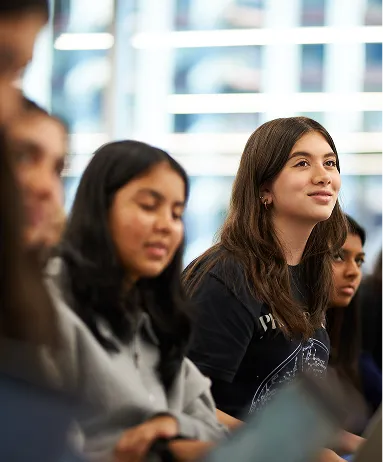
Coming from a TKS alumni herself ;)
Heya! I’m Anh, an 18 y/o girl from Vietnam living in Canada who’s currently an alumnus of The Knowledge Society Innovate program (a.k.a the first year) and did the virtual program.
This is my TKS Portfolio and my website with the projects, and articles that I’ve written and worked on so far in the 2023 program.
I’m writing this article to share my experience, what I’ve gained from TKS, and then the juicy stuff 😱 — is it worth a shot? I would recommend this read for anyone curious about TKS, whether it is a parent or a student who’s looking to apply for this program and wants to learn more from someone who’s experienced it before! This article is written purely based on my personal experience, but I can guarantee you it’s 100% authentic :D
My Intro to TKS
Before TKS, I was an intern for a startup back in grade 11 and instead of a paid internship, I was given mentorship. The startup founder recommended me check out tech opportunities when she was mentoring me. And like any other high schooler driven to find extracurricular opportunities, I searched it right up and out of serendipity I found TKS
This was my initial reaction after searching up TKS :

I mean, what the heck are these teenagers doing? 14 y/o consulting for big companies like Walmart to speaking on big stages, working on technologies with fancy names. When I was 14, I probably closed and opened the fridge wondering why the light turns on and off lol — it sounded all too good to be true.

So I searched up other websites like Reddit and there were a lot of mixed reviews including that TKS is a scam (100% not true by the way, not sure why its framed like that) but I decided to give it a shot anyways — I mean it doesn’t hurt to apply eh?
The application involves listing out some work/projects you’ve done before, why you’re interested in the program and is an overall assessment of who you are as a person and whether or not you might fit with TKS. Afterwards, I had an interview with a director at the program and was extremely nervous for it.
I spent literally hours reading every single interview questions (actually, I still recall most of them, one was an interesting one on how you would calculate the volume of the car filled with a bunch of tennis balls but anyways back to the review) and then it hit me — all of that work literally doesn’t even matter. The interview is just a few questions from the directors (people who work at TKS and will coach/mentor you) to see who you are, your vibe and enthusiasm — so just come with a positive attitude and you’ll be fine!
Afterwards, I had to write an article on a brief introduction of a technology and chose Web 3.0 — takes a few hours to write and it allows you to learn about applications of different technologies too!
Then I GOT IN :)

I was really excited but the price tag threw me off a bit. Its quite common for a few first-years that I’ve talked to (called innovates). My TKS friends told me they were quite skeptical about accepting the offer since they had little info to whether or not its a scam or if its worth it.
However, since TKS also have financial aid (for students who demonstrate financial assistance or have income proofs to show they cannot financially afford the program), I applied for their full-ride scholarship, also referred to as the NN-scholarship. This involves working on a project, writing an article on it and submitting a video.
I was quite nervous during this process since the exemplar projects looked so well done, but I decided to choose something I was interested in which is quantum computing, did a bit of research and worked on a project with an intention to solve a particular issue/problem. And gladly, I got a full-ride scholarship to the program. This led me to my journey at TKS :O
I Used to be a Blank Sheet of Paper 📄
Before TKS, I knew nothing about emerging technologies like longevity (did you know people are trying to elongate our lifespans?!), gene editing, or edge computing.
I was also really shy and got nervous especially when I had to present in a large audience.
I’m also the typical high school student who does the average stuff — you know, varsity sports, clubs, councils, studies a bunch to get good marks to then get into a good university. My typical routine was studying for tests, grinding for sports, and doing clubs at school.
My decision of joining TKS was rooted in personally wanting to challenge myself and step outside of my comfort zone. I mean, life is too short to do the ordinary so why not strive to be extraordinary?
TKS itself is a human accelerator, designed to develop the world’s young problem solvers and change-makers who want and are passionate in making an impact in the world using emerging technologies.
After TKS… I’m a More Colorful Sheet of Paper 🌈
I worked on a few AI projects, as shown in my portfolio. I was no longer a typical high schooler doing the bare minimum, I mean, I didn’t quit my passions like competitive swimming but I was able to find what I truly enjoyed (which is AI) and not just some random CS club coding some simple calculator, I now learned how to code chatbots :)
I also got a chance to speak at C2 — which I never thought would become a reality!
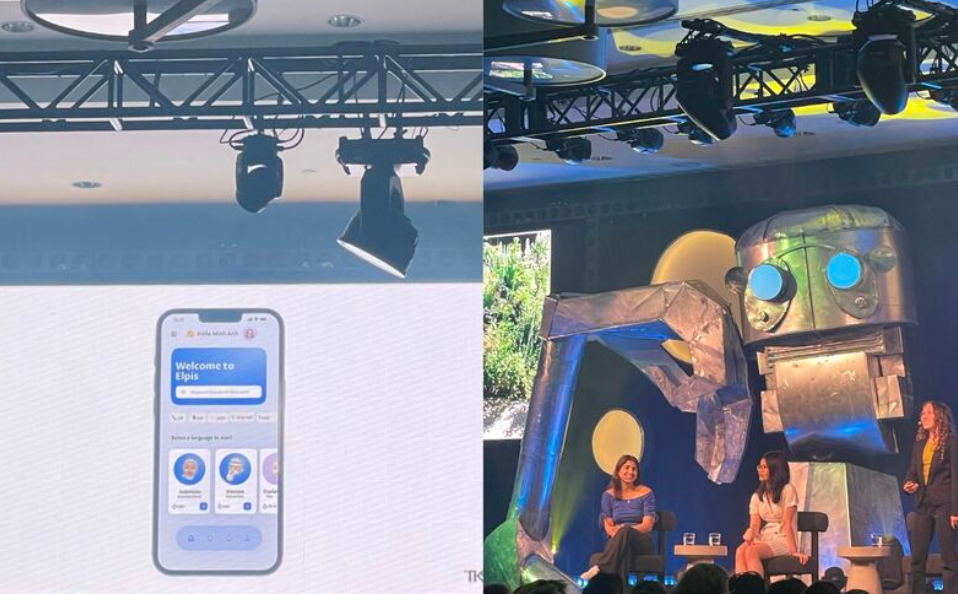
I attended (TKS either selects students or gives out free tickets to conferences for you to build relationships with people in your desired industry & listen to talks from amazing people) conferences like World Summit AI, Elevate, and C2 and met some super cool people like Yoshua Bengio (one of the brightest minds in AI). I never knew conferences existed before, or how to approach them. TKS taught me how to build good relationships and how to get the best of tech conferences like the ones I’ve mentioned above. I’m also interning with TKS right now (yes, there are opportunities to work for TKS as well!)
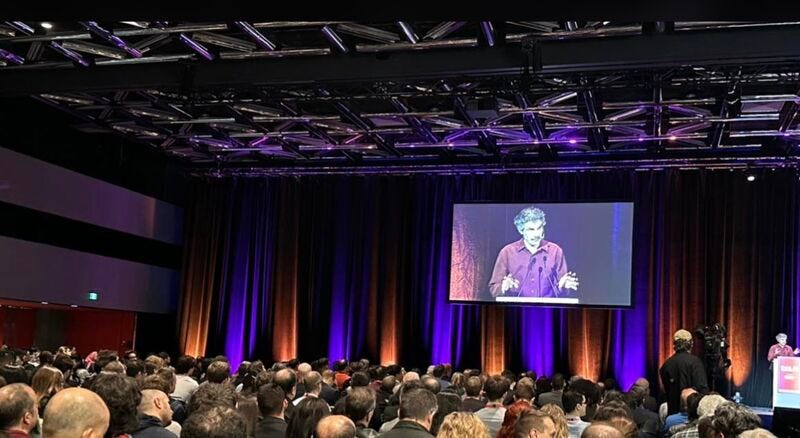
From those conferences, I built relationships that lasted and now I’m interning for two companies in the summer — Prodago and ShapesImmersive. Last week, I got a chance to go to Vancouver and grabbed lunch with the CEO of the company I would be interning for.
I met friends who are going to last for a lifetime!
I’m mentored by the best people I could ever ask for as a mentor: Pranav (monk + engineer + entrepreneur coach) & Jennah (TEDx speaker + entrepreneur).
I’m also now friends with a mentor who I met in real life through TKS and we talked for like 4 hours. And now he’s my favorite person I’ve met this year + a cool startup coach who taught me so much about entrepreneurship.
After TKS, I’m more well-equipped with tools, guidance from mentors, and mindsets that would help me become more successful. I’m also more fearless and now someone who’s always down for a challenge.
Ummm…But How?
Now you might be wondering how I’ve changed.

I believed its because of the 5 core values TKS is centered around:
- Community
- Focus
- Mindset
- Challenges, moonshots & hackathons
- Relationships & Mentorship
Community 🤝
If you search TKS on Linkedin, you would see a huge community (literally hundreds) of students working on different projects using emerging technologies. Check out some of my friends and their projects/missions:
Get Đồng Nguyễn Minh ANH’s stories in your inbox
Join Medium for free to get updates from this writer.
Subscribe
Remember me for faster sign in
Beatrice, a 15 y/o working on her project of freeing the moon from the sun’s UV solar radiation with satellites and superconductors in the realm of space technologies.
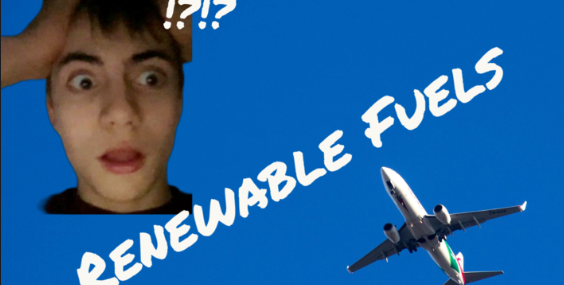
Theodore, he’s passionate about climate technology and is working on a carbon capture system that can fuel airplanes.
Shanzeh, who’s focusing on longevity and is creating multivalent vaccines that trigger an immune response of antibodies & cytotoxic T cells that can target and kill bacteria.
There’s more to it! A lot of my friends are working with startup accelerators to working on the craziest projects!

These people that I’m surrounded by inspire me to work on shit that matters and accelerate myself. The community is a critical part of TKS, as you’ll learn so much from others who shares similar passion. People won’t shy away from giving you honest feedbacks to help you grow, give you support — which is why your growth will be exponential by the end of TKS.
At school, you are surrounded by competitive people who always strives to score 100s in their tests or take as many clubs as possible.
At TKS, you’ll be surrounded by people who strives to solve the world’s biggest problems, who are constantly growing and helping each other.
The people you surround yourself with are an extension of your energy, your beliefs and your goals. Surround yourself with people who will lift you higher.
Channels: We used Slack to communicate with everyone and there are different channels you can join, from book clubs to specific channels like your city (for example, we have a Toronto channel where people post opportunities or events in Toronto), to university channels where people give advices and posts scholarship opportunities. These channels are used around the TKS community so everyone can grow with each other.
There is also something called Velocity which I experienced for the whole year. Velocity is an accelerated program within TKS for people who want to go 100% deep into TKS, meaning their personal growth at TKS is the #1 priority. Here, you follow weekly guides with requirements like daily exercise, listening to podcasts and reading curated notes on successful people that truly helps expand your growth. Velocity is like preparing for a marathon, the weekly habits and guides slowly compounds over time and prepares you to on maximizing your growth and potential. This summarizes Velocity fairly well (written by Navid, the co-founder of TKS).
If you really want to maximize your growth and have a few hours to spare a week, I recommend you trying it out.
Focus 📍
Before coming to TKS, you’re not expected to know anything. There are learning modules with dozens of topics on emerging technologies so you can find out what you’re passionate about and make that what we call a “focus” (I’ll get more in-depth soon). These modules are about a few hours long and can range from topics like edge computing, personalized medicine, blockchain & crypto…. with tailored lessons, videos, modules, and quizzes to help you learn about these technologies.
Ok, so now onto the focus.
This is where most opportunities in TKS come in. The Focus is TKS’ learning structure that’s focused on hands-on applied knowledge. There are 2 types of focuses: the technical focus, and the scientific focus
- Technical Focus: This is suitable for technology-centered topics (AI, Quantum Computing…). You build two projects called a replicate, using someone else’s guidelines or tutorial, then tries to make a new project using the knowledge you’ve gained from those guidelines. These replicates can involve an article, a video, and the project itself. Afterward, you would create a completely new project by yourself at the end from the knowledge you’ve accumulated from the two replicates you’ve done.
- Scientific Focus: This is a more science-centered topic (Cellular Agriculture, Regenerative Medicine, Optogenetics). In this focus, you would build an experiment surrounding your topic, review 10+ research papers and synthesize them in an article, then finally a scientific proposal or hypothesis.
There is no grading system (TKS is not like school), and neither are there deadlines. TKS is centered around an individual’s personal growth and what TKS does is give you feedback and resources for you to grow and complete your focus. The projects you create can be leveraged as “keys,” to open different “doors,” of opportunities like internships, speaking, and conferences. However, they are earned and not just given to you by chance — just like life, you need to earn it.
To work through the focus, I’ve built relationships with people on Linkedin, like a mentor who is helping me in my AI projects — Darien Schettler, as well as asking for guidance from my directors (a.k.a, the mentors at TKS, mine was Pranav and Jennah).
Mindset 🧠
This is what you are not taught at school but is SO essential to 10x your growth. Have you ever heard of mindsets like boss mentalities, and anti-fragility? TKS introduces me to mindsets that are utilized by successful people and those that make an impact on the world, like how Elon Musk’s thinking process is based on first principles.
You don’t just read about them. You internalize these mindsets and they become your routine or even a habit. As you practice these habits through your focus, projects like challenges and hackathons (which I’ll get in later) — you’ll compound on them and become 1% better every day.
I used to be terrible at networker on Linkedin since no one taught me how to be confident or ask good questions (I would go on calls asking questions like what did you do on your daily job… yeah people hear that all the time and it is boring) to now making deep and meaningful relationships and calling some of them friends!
Afterward, I noticed I became a better version of myself. I had my life together, I became more brave to tackle challenging obstacles (ex: I used to be afraid of heights but I just went skydiving a month ago). There is still a lot of growth and lessons to learn throughout my life, but I was able to change my attitude, and how I view myself and the world around me through these mindsets.
Challenges, Hackathons & Moonshot 🧩
TKS partners up with different companies for a consulting challenge called a challenge, it’s something you’ll never see before. Usually, these companies are multi-billion dollar companies with difficult challenges to tackle, and YOU get to be the ones working on them. I worked for a challenge with Walmart and Amazon, and got a chance to pitch to Amazon executives on our idea about Alexa! There are a lot of frameworks in business that you learn and apply in these challenges and create recommendation decks for the company.
At school, you are given tools like textbooks that give you the answer at the back so you can check whether you are right or wrong. This is not how the real work functions as there isn’t always an easy answer on the back of a textbook. In TKS Challenges, you have the chance to think of creative solutions and work on problems that do not have solutions — yet! This makes it the fun part where you can venture out to different learning opportunities and learn how to be independent and creative thinkers by analyzing the problem through a different lens.
Check out my recommendation deck for Walmart here and my recommendation deck for Amazon Alexa here.
Additionally, we have something called a hackathon which despite its name, you don’t have to be a genius coder. It is a 24-hour sprint where you and your teammates work on a product with a theme around technologies like Blockchain or your Focus and present it to amazing judges. I find that this teaches me critical mindsets by allowing me to experience them first-hand like done > perfect and how to think of solutions when you have a short timeframe.
Click here to check out my deck for the first hackathon where I looked into nanorobots and here for the second hackathon where we thought of using reinforcement learning for GPT to assist general practitioners.
In the end, we have something called a Moonshot where I get to meet one of the greatest minds — Astro Teller. Moonshot thinking is basically when you pick a big problem to work with like energy consumption and create solutions to them using a disruptive technology. To make this a reality, you have to abandon the idea of creating a 10% incremental improvement and focus on a solution that will bring ten times (x10) improvements, or solve it completely. For my moonshot, my team and I worked on maximizing liquid air storage and making energy cheaper than natural gas.
I know people, including friends who had received real-life opportunities to work on their moonshot ideas afterward — this is real life!!
Relationships & Mentorship ✍🏼
A concept that isn’t always taught is how valuable relationships are, especially when it comes to careers and growth, TKS teaches you how to come up with good questions, build relationships, how to properly attend conferences and walk up to people, how to leverage meetings and cold emails or cold-calls. This can lead to vast opportunities for your future career to internships.
It is not guaranteed, I find that to get certain opportunities like internships, you have to produce meaningful projects and be authentic. We also have something called a monthly newsletter, feel free to check mine out here, where we update people in our network on our progress on platforms like Linkedin and Twitter.
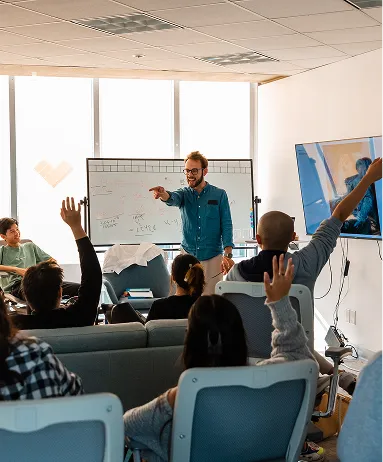
You’ll also attend these things called “sessions” which happen roughly a few hours once a week, where you get trained by mentors, a.k.a, the directors at TKS. Here, you are introduced to frameworks, mindsets, and exercises that would train you how to approach challenges and hackathons.
These sessions are not perfect.
We have something called a breakout room where people gather up and work together in groups. I find this can be a waste of time since you are randomly paired up with people and sometimes, certain people in TKS don’t do the work, and it is like an awkward silence where you have to do the work yourself.
If you can, I 100% recommend getting into the in-person program because you get to be much more interactive and not just staring at a camera screen. If you are to choose the virtual program, I recommend trying to find people who share similar ideologies, working habits, or goals and pair up with them. The people you choose as your close friend in the community also is important when it comes to completing projects like the hackathon and challenges.
But What If I Can’t Afford It ? 💰
There’s a lot of skepticism around the price point and trust me I’m broke too. But TKS gives out a lot of financial aid, and even without it, I think the price point is well justified since you’re going to be a completely different person by the end of it all. You’re also getting coached by some of the brightest people from entrepreneurs and speakers and get access to one of the brightest communities.
It’s not just an extracurricular, but it is an accelerator that will maximize your potential. I find that the experience isn’t the same for everyone because there are people who don’t put a lot of time into the program because they view it like an extracurricular checklist to put on a university resume. Those who want to grow and produce meaningful projects tend to get amazing opportunities out of it so. You don’t need to already have a bunch of internships or have your startup before joining TKS, you just need to cultivate curiosity, find a passion and work on it, always ask for feedback, and have a desire to grow. Don’t just work on something for the sake of it or to “seem” like you’re productive or check it off your to-dos.
TKS isn’t a school to do’s, it is an iterative growth progress that will change you as a person if you put in time and effort into it. I find personal growth and education to be something worth investing in because no one can take it from you.
Trust the progress.
I hope I provided more insights and value and that it was worth a read.

.png)
.png)
.avif)