So, you are an ambitious teen who has a really cool idea but you don't know where to start. Your heart is in the right place but your mind is racing with questions ranging from where to actually start, how to find a co-founder to filing the paperwork, writing a business proposal etc. But here’s the thing. That checklist is quite useful only if you are a 30-year-old.
Here's what I am trying to say - these tips can help you if you have a base in "being an adult" i.e a bank account you can open alone, a network of people with expertise who are ready to quit their jobs and capital. Lots of capital. A starry eyed teen with big dreams reads step one only to realize they're locked out, and they quietly decide they are not ready yet. That's the trap.
The truth is - the teens who actually go on to build real things almost never started by trying to "become a founder." They didn't have a business plan. They had a problem they couldn't stop poking at, and they started building before anyone told them they were allowed to.
So forget that boomer checklist and start screenshotting, saving, DMing it to yourself because here's the step by step!
Step 1: Find a Problem That Annoys You
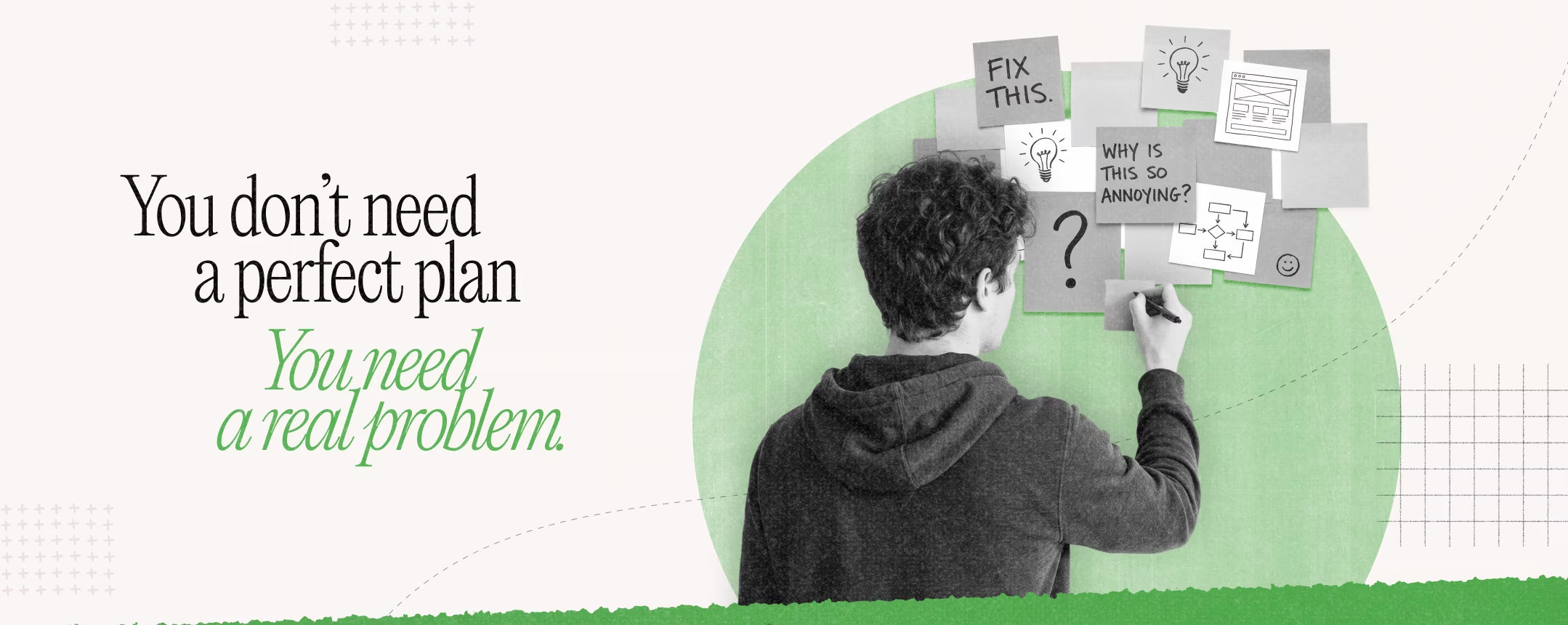
Not a big, glamorous “problem worth solving." That's TED-talk language, and it'll freeze you before you can even start. Find something that's actually broken in your world - the sign-up process for your school club that takes six emails, the thing your favourite game gets wrong, the reason your group chat keeps losing track of who owes who money, the community of other driven teens you keep seeking - what would you fix?
The best teen projects don't start with "I want to be a founder." They start with "why is this so annoying, and why hasn't anyone fixed it." That is the fuel that will actually keep you going.
Step 2: Text Ten People Before You Build Anything
The instinct is to lock yourself in your room and build.
Well, DON’T.
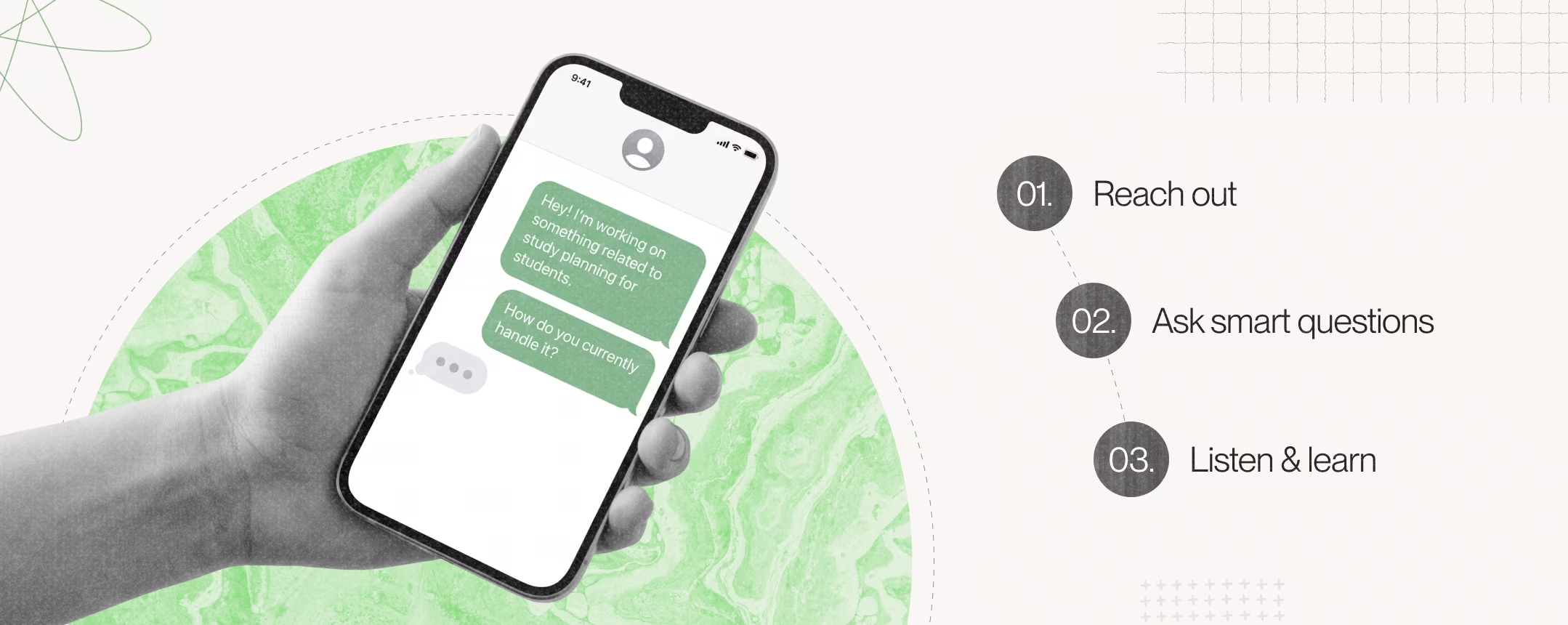
Your best bet at success is with a community who has done it before. Message ten people who actually have the problem and ask them about it. But here's the trick: don't ask "would you use this product?" ask them "how do you deal with the problem right now?”
What you're hunting for is whether they've already rigged up some ugly workaround, that's your proof the problem is real. And this becomes your first research.
Step 3: Build the Smallest, Ugliest Version Possible
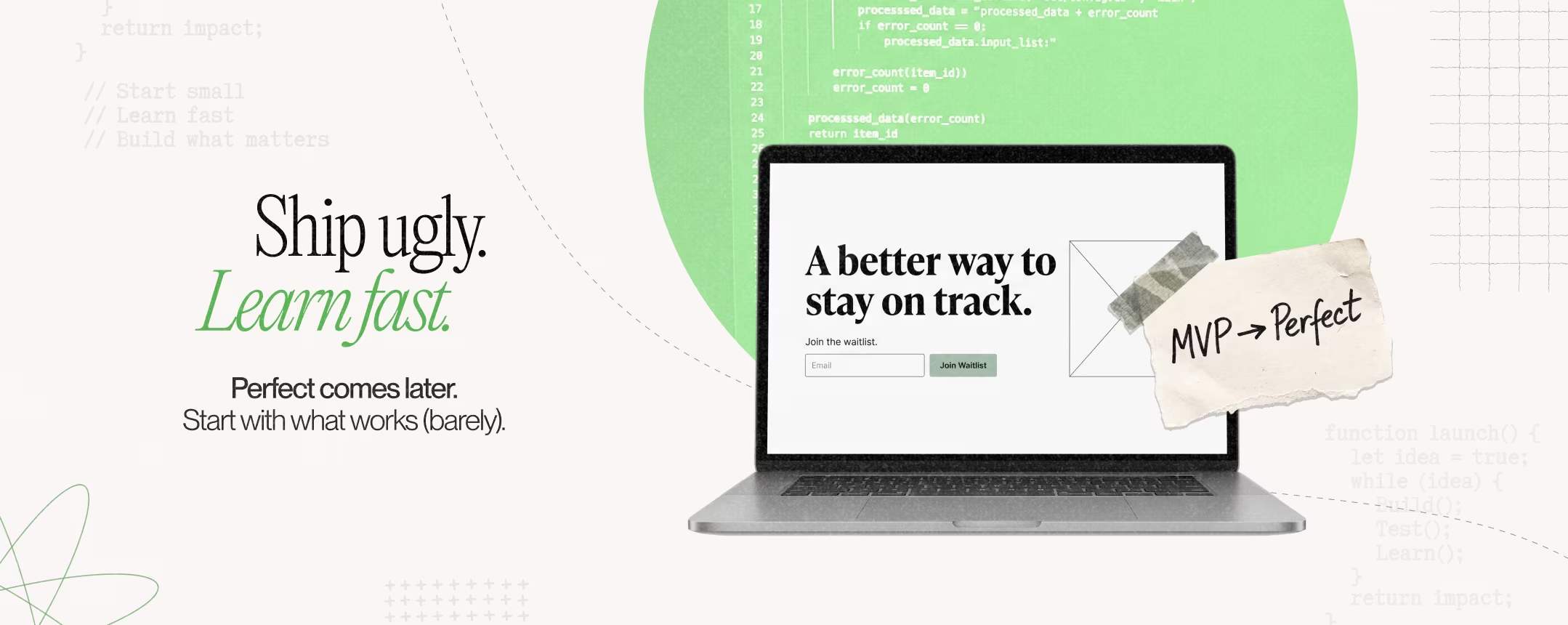
Resist the urge to be perfect in one go. That will only slow you down. Your first version should be almost embarrassing, and that's on purpose! A Notion page. A Canva mockup. A fake "join the waitlist" button that doesn't even work yet. Your aim is to explore different tools and get a real thing in front of a real person.
This has a name - creating the minimum viable product, from Eric Ries's The Lean Startup. The idea is to build the tiniest thing that lets you learn whether you're onto something, then improve from there.
You are not building the final app. You're answering one question: does this actually help someone, or did I just think it would?
Step 4: Slide Into the DMs of Someone One Step Ahead
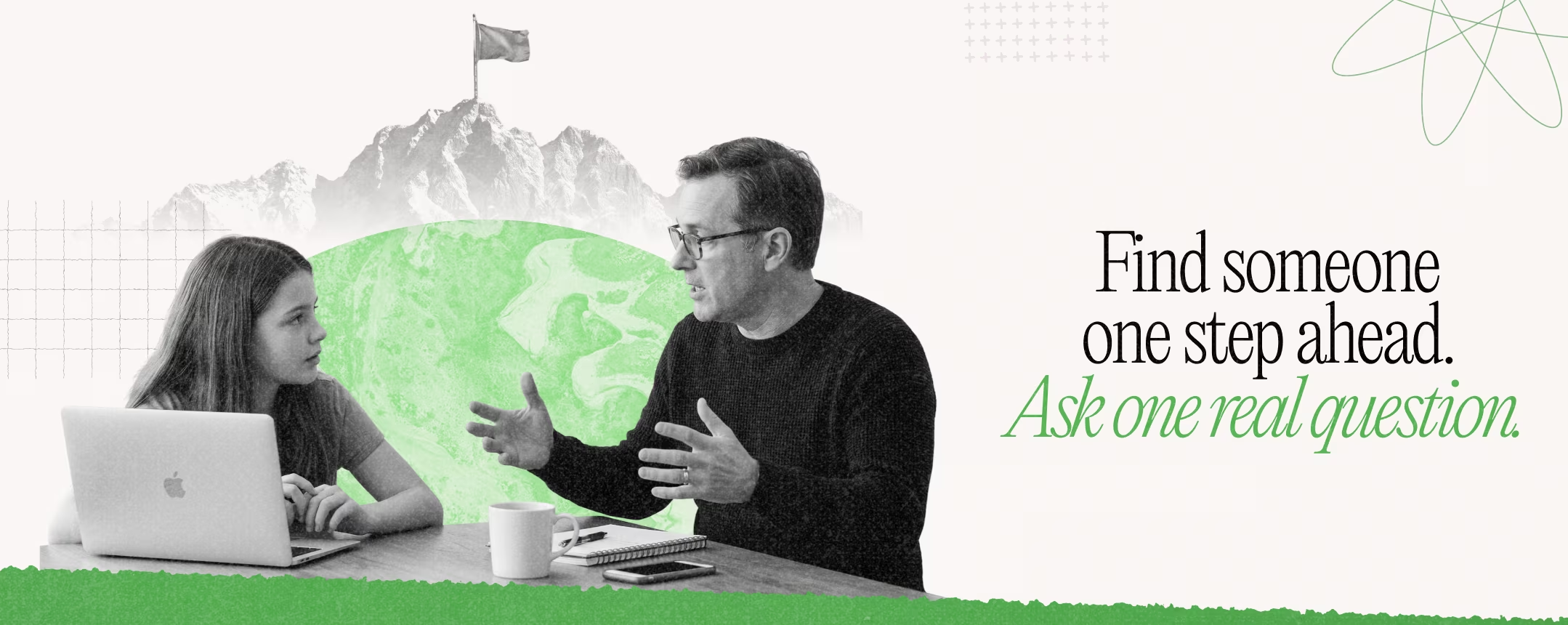
You don’t need to build a whole team and "assemble a board of advisors” right away. This step needs to be done intentionally because you get mentors by being specific, not by asking a stranger to "mentor you."
Find someone one step ahead of where you are - an older student who shipped something, a founder in your space, a grad student who studies exactly your problem.
Send a short, direct message with one real question about the thing you're building. None of that vague "can I pick your brain," or paragraphs of admiration. A good, specific question about work they care about. People are more likely to answer when the question is direct.
Step 5: Get One Real User Who Isn't Your Family
Just ONE person, not related to you, using your product. That’s it. That's the whole goal of the first version. That single user will break things you thought were solid and probably love things you almost removed.
Then get the next one. Then next. This is the part of the teen founder roadmap that separates the people who talk about their idea from the people who have one out in the world.

And No, You Don't Need to Raise Money
Notice what's not on this list. Fundraising. Incorporating. A pitch deck. That's not an accident. Money solves scaling problems, and you don't have a scaling problem until people are already using and maybe paying for your thing. Raising too early just piles pressure and paperwork onto something that hasn't proven itself yet. Handle the legal stuff - an LLC, a business bank account, signing contracts - only when there's real money on the table, and get a parent or guardian to help when you do. Not before.
This is how TKS alumnus Ben Nashman started - he got obsessed with a hard problem as a teenager, went on to found Synex Medical, and later became a Thiel Fellow. Obsession for the idea comes first. Then comes the company. It’s always in that order.
FAQ
Can a 15-year-old legally start a business?
Yes. A 15-year-old can build a product, get users, and even earn money - a parent or guardian just needs to sign contracts and open bank accounts on their behalf. You don't need to formally register a company to begin. That step only matters once there's real revenue or a customer that requires it.
Do you need a co-founder as a teenager?
No. Plenty of teen founders start completely solo, and forcing a co-founder before you've built anything usually creates more friction than it solves. If one shows up naturally because they're as obsessed with the problem as you are, great - but it's not a requirement to start.
How do you validate a business idea as a student?
Message at least ten people who have the problem and ask how they deal with it right now, not whether they'd use your idea. Look for whether they've already built their own workaround - that's the clearest sign the problem is real. If nobody has bothered to solve it themselves, the need probably isn't strong enough yet.
How long does it take to launch a startup as a teenager?
You can get a rough first version in front of a real user in days, not months, if you keep it small. Building it into a real company with revenue takes far longer and varies wildly from person to person. Early on, the goal isn't speed to launch - it's speed to your first honest piece of feedback.
Do you need a business idea before joining a program like TKS, or does it help you find one?
No - you don't need an idea walking in, and honestly most people don't have one. Finding a problem that actually annoys you is the first step, not a prerequisite for it. A program like TKS is built to walk you through that part - the finding part, not just the building. So, showing up without an idea is normal, not a disqualifier.
How is a program like TKS different from a business class or an entrepreneurship textbook?
A class or a textbook teaches you about entrepreneurship. The theory, the vocabulary, the case studies etc. The whole point of this guide is that you learn to build by actually building, with real users and real feedback, which is what a program like TKS is structured around. Reading about your first customer and landing your first real one are completely different experiences, and only one of them teaches you something that sticks.
.png)
.png)
.avif)