Hi, wonderful human. I’m Gabriel Dalton.
If you have been scrolling Reddit, you may have seen posts calling The Knowledge Society (TKS) a “scam.” I’m here to share my own experience so you can decide for yourself. Those Reddit voices may be genuine, but they only represent the experiences of their authors.


For me, TKS was the opposite of a scam. I joined the Vancouver Sunday Cohort (2024–2025) at the age of sixteen and can confidently say that many of my current successes can be attributed to the program.
Now 17, I’m an endlessly curious tech enthusiast, usually juggling more projects than hours in the day — so this review explores TKS from every angle: the highs, the lows, and everything in between.
TKS terms you’ll see
- Innovate: first-year participant
- Activate: second-year participant (an “innovator” who returns)
TKS uses 'innovator' instead of 'student' to signal that you are expected to build, not just sit in class.

Table of Contents
- How This Review Is Scoped
- Applying, Tuition, and Financial Aid
- 2.1 Financial Aid Breakdown
- 2.2 Scholarship Video and Funding Sources
3. First-Day Logistics, Meeting the Cohort & the Director
4. My Focus (Blockchain (DeFi))
5. Beyond the Core Sessions
- 5.1 Content Crew
6. Velocity: Systems, Habits, and Mindsets
- 6.1 Entry Challenge and Weekly Tracker
- 6.2 Monthly Newsletters, Squad Syncs, New‑Person Rule, and Daily Updates
- 6.3 Key Mindsets Trained in Velocity
7. Top‑G Channel — High Standards, High Pressure
- 7.1 Outcomes from the Channel
8. Challenges and Controversies
- 8.1 Photo‑Consent Gap
- 8.2 Broken Promises on New Initiatives
9. Virtual Sessions and Global Challenges
10. Networking and Personal Opportunities
- 10.1 A Moment With Esther Kim
- 10.2 Screen Break Youth‑Coach Role
- 10.3 Peer Support, Outreach, and the Boss‑Mentality Badge
11. Consulting Challenges With Industry Partners
- 11.1 IKEA Practice Sprint
- 11.2 Microsoft, Samsung, and Maverick Final Challenge
12. External Events
- 12.1 Microsoft Garage Visit
- 12.2 Web Summit Vancouver
13. Showcase, Graduation, and Personalized Scores
- 13.1 Vancouver Emerging Technology Showcase
- 13.2 Graduation and Final Attribute Scores
14. End-of-Year Wins From the Cohort
15. Final Takeaways and Advice for Future Innovators
16. Bonus: Velocity Deep-Dive (Link to companion article)
Scope of this review
I am writing about the Vancouver in-person cohort. The virtual path is different. We were sometimes required to join global virtual sessions, and I disliked them enough to leave midway. That reaction may stem from my work-centric mindset; many of my peers loved those calls for worldwide networking. Keep that in mind as you read.
Thinking of applying to TKS?
Check out this page to see what TKS looks for in a strong interview — it could make all the difference.
Tuition and Financial Aid Journey
TKS is a serious investment. Vancouver’s Innovate tuition sits at $6,850 CAD, and other cities are in the same ballpark — if not more. The good news: the team works hard to make sure money isn’t a deal-breaker.
Apply for aid early
During the enrolment steps (see the green pipeline graphic), I completed the short financial aid form and explained my situation.

Initial grant — $1,500 CAD
A few days later, TKS emailed me the message in the first screenshot, confirming a $1,500 CAD award.

Grant increased to $4,850 CAD
I still couldn’t cover the balance, so I wrote back with more details on my constraints, and they allowed me to work on the NN scholarship project. The founders reviewed it and bumped my grant to $4,850 CAD.

Closing the gap.
I already worked in a technology role at a local church, which partially covered the cost of TKS. Combined with my grant and the paycheck from that job, I was able to afford the remaining amount.

If the cost feels like a barrier, don’t hesitate to apply for aid. TKS has real scholarship funding, and they’ll work with you to figure it out. Financial aid doesn’t impact your acceptance — it’s purely based on need and meant to make the program accessible.
First-Day Logistics

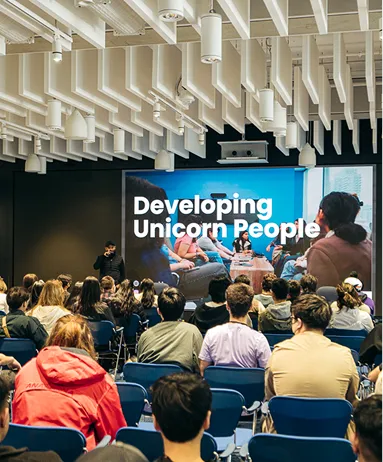
Our cohort met at And-Co, located at 1575 W Georgia Street. I’ll admit, finding the entrance felt like a scavenger hunt: the photo on TKS’s Vancouver page highlights the centre tower, but the actual door is located in the small side entrance of the building to the right. A simple arrow or caption on the website would spare newcomers a few confused laps around the block. Once inside, however, the space set an energetic tone for the day.

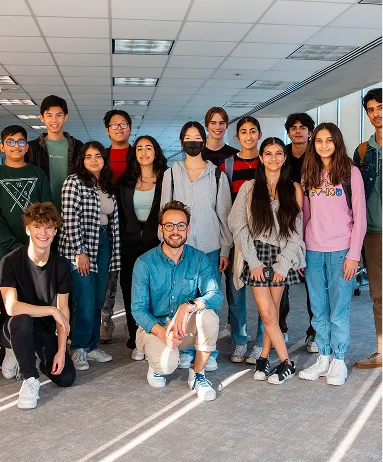
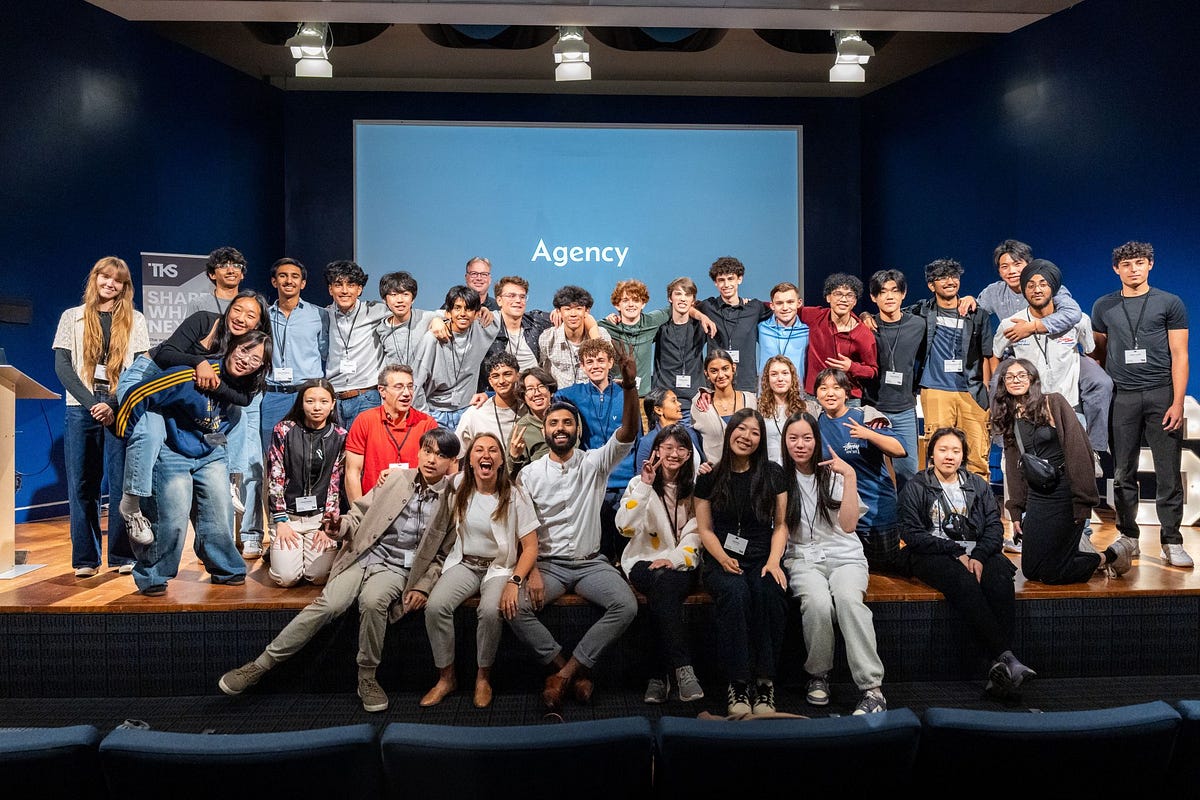
Meet the Cohort — Vancouver TKS 2024/25
Aidan Zhang, Alina Shi, Aliza Hlus, Anika Prabhu, Antonina Hallonquist, Aryan Kazimi, Bowen Zeng, Cindy Yang, Daniel Feng, Darien Yang, Denye Ng, Dylan Rolfe, Gabriel Dalton (me!), Innayah Imran, Kaden Yeung, Laia Lehmann, Mattias Eisenkraft, Megan Winstanley, Om Gian Gulia, Riddhi Deb, Safeer Lalji, Savaira Parmar, Tom Buchwald, Yousef Soliman, Zen Blocka, and Zsigmond Pelobello.


My Director: Pranav Menon
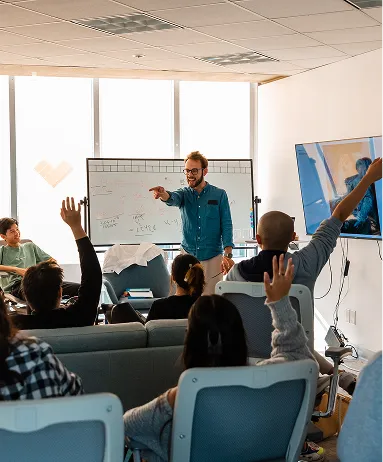
Depending on the specific cohort you join at TKS, different directors will be teaching each one. There are different ones for the virtual sessions than for the in-person sessions; however, they may overlap in some areas. For the Vancouver cohort, we have Pranav Menon.
He has an extensive technical background in engineering and other ventures. He worked at entrepreneurship@UBC, and during the pandemic, he launched his own company, developing an AI chatbot designed to help post-secondary institutions reduce inquiry response times.
Trigger warning: He also shared experiences from his year volunteering at a suicide‑prevention hotline. We held "brainpods," similar to hangouts—both virtually and in person—where we discussed life experiences like this one.
When you join TKS, you'll be mentored by your director and can chat with them at any time on the TKS Slack channel. You can also schedule meetings at your convenience to discuss any topic of interest. One key aspect of TKS is that you don’t just pay once and finish after 10 months; you have ongoing access to your director. For example, Pranav mentions that alums can still schedule meetings with him after graduation, including me. However, you need a good reason to do so, and if you want a follow-up meeting, you must have completed the action items from the previous one.
My Focus
For my technological focus at TKS, I chose blockchain and delivered a presentation on DeFi. I was quite nervous and stumbled a few times, but the experience taught me a lot. I received direct feedback from the entire cohort, including Pranav, which helped me improve and gain confidence.


Going Beyond the Core Sessions
I took on much more than the typical Innovate student. Beyond the Sunday curriculum, I explored three major side-tracks: Content Crew, Velocity, and the Top-G Channel.
- Content Crew
The TKS social media manager at the time, whom I will refer to as John, selected me to develop and refine content for the official channels. He expressed, “I’d like to make you one of two official content interns for Vancouver.” Here's what I produced during those first few months.
- Filmed about 30 short videos, including 5 sit-down interviews
- Edited 2 complete videos, wrote captions, collected feedback, and delivered revisions
- Shot roughly 450 photos, selected and retouched 21 for publication quality
- Spent about 5 hours uploading and tagging every file
We were never paid. The explanation was that our clips were still “not good enough” to earn the stipend reserved for fully finished reels, although many of our shots appeared in TKS edits. After two unpaid months, Pranav Menon, our Vancouver director, discovered what had happened. He confronted John, arranged back pay for the team, and soon afterward, John was no longer with us. I believe he was let go.
Velocity
According to Pranav, Velocity is “the best part of TKS” — though, to be fair, he says that about almost everything. Velocity is TKS for your daily life: a strict regimen that forces you to build habits, push your limits, and track every hour you spend.
As of April 13th, 2025, I had been working through Velocity for almost four months, and I was proud of the progress I had made. The sessions started an hour earlier than the typical Sunday schedule, so we had to be seated by 11:15 AM. If you were even a minute late, you were out — no exceptions. Pranav warned on day one that “only a couple of students ever finish Velocity.” Standards have loosened a little this year — he no longer audits every tracker — so a few friends have slipped without punishment, which is frustrating for those of us who still clear every single checkpoint.
How do you get in
To join, you first do something genuinely hard — cook a full family dinner, pitch a business idea Shark Tank style, or run 10 km. Only after that do you receive the weekly tracker:
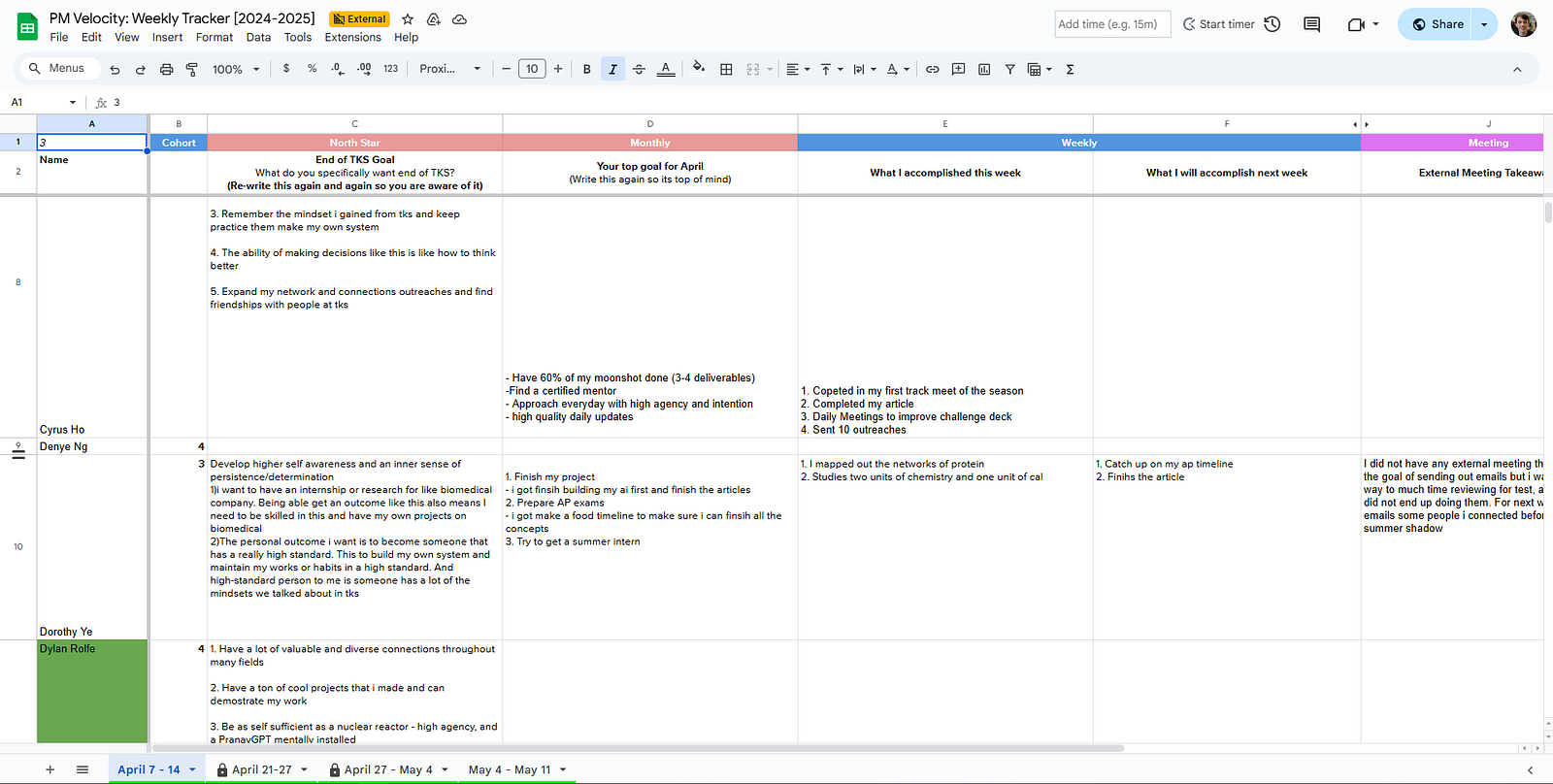
Each week, Velocity releases a mini-curriculum — comprising articles, podcasts, and videos — focused on a single thinker or idea. Week 15 was dedicated to High Agency and centred on the work of George Mack, the creator of https://www.highagency.com. Pranav opened the session with a blunt hierarchy of traits:
“If I had to rank the number‑one attribute of all time, it is high agency.
High agency is extreme proactiveness. Life happens because of you, not to you. Two months remain in TKS; operate at a super‑high level of agency and your dreams will happen.”
He walked us through Mack’s site and screened a short video that distilled the concept into practical steps we could start that same afternoon.
Velocity also layers on four non-negotiable habits that run alongside the tracker:
Monthly newsletter
Everyone writes a short newsletter at the end of each month. The idea is simple: a website link can be forgotten, but an email remains in someone’s inbox forever. It keeps mentors and new contacts informed about your projects and progress.
Squad sync
Each student is assigned a small squad for weekly accountability. My partner is Darien Yang; we open every sync with a quick chess game, then review goals, blockers, and lessons from the past seven days.
One new meeting every week
We must meet one new person — face-to-face or on Zoom — every single week. Cold emails, warm introductions, LinkedIn posts, and Lu.ma events all count. The payoff is compounding: every new friend expands the network by another entire network.
Daily update
Every night, I fill out a reflection of the day on the website I created specifically to make the process efficient.

I record:
- three top tasks for the day and whether they are completed, partially done, or untouched
- wins and challenges
- a person or thing I am grateful for
- habit checklist (drink two litres of water, read ten pages of a book, work out, Duolingo, meditate)
The next morning, the form reminds me of the top three tasks for the new day. After each outreach call, I invite the person to join my newsletter, which feeds the following issue with advice on universities, business strategy, or whatever I am building.
I maintained the daily update streak for 30 consecutive weeks — 210 days in total. Every entry went into a giant Dropbox Paper file:
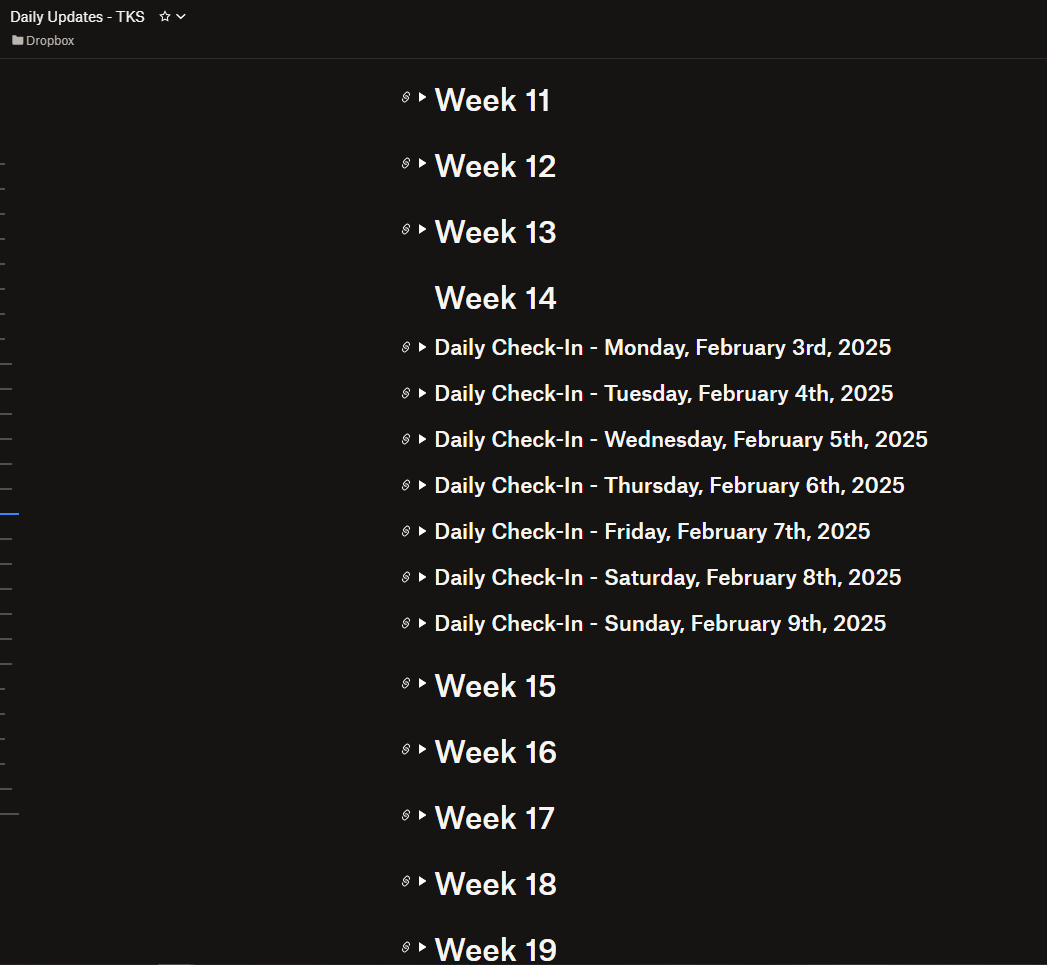
Until the doc grew so large it crashed my browser and forced me to spin up a fresh “Daily Updates v2.”

At first, filling out a daily update feels almost impossible. Carving out the time to reflect, remember every field, and be honest about wins and misses is a bigger mental load than it sounds. Give it a month, though, and it becomes second nature. The updates go straight to your squad channel; if you miss a day or keep procrastinating the same task, the lapse is public, and your teammates call you on it.
Each Velocity session concludes with a mindset lesson, as mindsets drive every action we take. Week by week, we trained ourselves to default to:
- Bias toward action — the ability to choose and move rather than overthink (borrowed from Amazon’s leadership principles)
- Self‑awareness
- Done > Perfect
- Antifragility
- Discipline
- Figure it out
- Kindness
- Perspective
- Mindfulness
- Stoicism
- 10× Thinking
Digging deeper: If you’d like the complete breakdown of everything Velocity taught me — mindsets, outreach systems, weekly trackers, and personal inflection points — read my companion article on Medium: “Velocity at TKS: the mindsets, systems, and turning‑points that rewired how I learn and build.”
Top‑G Channel — High Standards, High Pressure
A standout feature of my year was the Top‑G Channel, a private Slack space Pranav created for the cohort’s highest performers. As of April 22nd, 2025, the room held just 17 people — 5 girls and 12 boys — so the spotlight felt bright.
To keep our spot, each of us had to hit steep weekly quotas: think 20 new outreach conversations, rapid project updates, and tangible progress every single Sunday. The positive side was clear: quick responses from Pranav, more detailed feedback on decks and ideas, and the feeling that someone was monitoring our metrics as closely as we were.
If you thrive on intensity, the channel is like jet fuel; if you prefer a steadier pace, it can become exhausting. I found it helpful but sometimes overwhelming, especially when layered on top of Velocity and core sessions.
Current outcomes inside the channel
- Darien — internship at Toyota (in progress)
- Harishvin — lab role at the UBC Quantum Matter Institute
- Aidan — position in an NF2 oncology lab at Harvard
- Dorothy — shadow placement in a UBC research lab (in progress)
- Gabriel — internship with a reforestation‑technology company (in progress)
Whether the exclusivity ultimately provides more value or increases pressure depends on each person. For me, it brought both: heightened accountability and a noticeable rise in stress.
Problem 1: Photo‑consent gap
At an open TKS session on February 8th, 2025, a student from the internal content team (not a professional photographer) snapped photos throughout the event. Those images later appeared in a promotional video shared on February 15th, 2025. Although the session was open to the public, the event page contained no media‑consent notice, and no announcement was made on‑site. Under British Columbia’s Personal Information Protection Act (PIPA), organizers must secure informed consent before posting anyone’s likeness online.
Several people featured in the final video were neither current TKS participants nor aware they were being recorded for social media or the TKS content archive. Beyond the legal risk, this omission undermines trust — attendees reasonably expect transparency about how their images are handled. I raised the issue and suggested adding a clear media‑release statement to all future Lu.ma registration pages. Unfortunately, I never received a response, which felt dismissive of my concerns. A simple disclaimer up front would protect privacy and help prevent complaints to the BC Office of the Information and Privacy Commissioner (OIPC).
Update: I received a response from Pranav on October 2, 2025. He addressed the concern directly, and we had an open and honest conversation about it. He also shared that TKS will be adding consent and liability language for open sessions moving forward, and that this update has been incorporated into their standard operating procedures across the organization. I was glad to hear this and appreciated how seriously the issue was taken.
Problem 2: Broken Promises on New Initiatives
In November 2024, Navid Nathoo announced that TKS would soon launch a new platform in beta and invited interested students to reach out for early access. I messaged Hari as instructed, but never heard back. Now, months later, the platform still hasn’t materialized, and there has been no update or follow-up communication.
At the same time, TKS teased “Super Velocity,” a founder-led version of our existing habit-building track. The announcement sounded major. I assumed we would get a detailed roadmap or at least a rehearsal call, but I’ve seen zero information, and other students report the same silence. If Super Velocity is running, it feels like a private pilot. No one told the rest of us how to join.
Unkept promises lead to confusion and frustration. When leadership announces new programs without sharing details or opening access, it becomes difficult to distinguish between actual initiatives and mere rhetoric. Providing clear timelines, written updates, and transparent registration instructions would significantly help restore trust.
Virtual Sessions and Global Challenges
One aspect of TKS that I didn’t particularly enjoy was the structure and content of some of the virtual sessions. Occasionally, if a local director was sick or there was a holiday, our regular cohort sessions would either be cancelled or led by another director, which disrupted the consistency of our experience. However, what stood out to me the most were the mandatory global virtual sessions. Personally, I considered them a poor use of my time — I attended one, left another midway, and skipped the third entirely.
An example of this was the “Global Challenge,” which aimed to help students connect with peers worldwide. While I acknowledge that others might have found this enjoyable, I did not. The activities involved, such as lip-sync challenges and games, felt disconnected from the core experience I had anticipated from TKS. Several fellow students I spoke with shared similar feelings.
The intention behind these global sessions is to foster a sense of international community. Still, they added little value, especially given the premium cost we pay for an in-person experience. Ideally, there would be greater consistency and relevance in the virtual content provided.
A Moment I Appreciated
One interaction I particularly enjoyed during my time at TKS was chatting with Esther Kim, the director of the San Francisco cohort. She was kind, funny, and genuinely approachable. When I mentioned someone who could potentially be a great guest speaker for the San Francisco in-person cohort, Esther responded with genuine enthusiasm and openness to the idea. Although this was a brief exchange, it left a lasting positive impression on me by showcasing the personal and human side of TKS.
There’s a popular saying: “Your network is your net worth,” and I couldn’t agree more. One of the most valuable aspects of TKS is the lifetime access it provides to both the learning platform and the alum community on Slack. The TKS Slack workspace is filled with various channels, offering spaces for alums from around the globe to connect, ask questions, share random thoughts, and exchange exciting opportunities. This continuous access to a global network is undoubtedly one of the most significant benefits of being part of the TKS community.
I Got a Job from TKS
My director, Pranav Menon, shared an exciting opportunity in the official TKS Slack channel: the Screen Break Youth Champion program, created by The Dais, a public think tank affiliated with Toronto Metropolitan University (TMU), formerly known as Ryerson University.

Screen Break (Pause d’Écran en français) is Canada’s first nationwide program designed to support students, parents, educators, and policymakers as they adapt to the emerging necessity of phone-free classrooms. Learn more at dais.ca/screen-break.
Get Gabriel Dalton’s stories in your inbox
Join Medium for free to get updates from this writer.
Subscribe
Remember me for faster sign in
I applied without expecting much, so it was an incredible surprise when I received this email:

After accepting the offer, it’s official: I’m now the national coach for the 20 Youth Champions!

I’m genuinely grateful to Pranav for sharing this opportunity through the TKS Slack channel. Without it, I likely wouldn’t have known about or applied to this role, and therefore wouldn’t have joined this fantastic team. This experience truly demonstrates the value of staying connected within the TKS network, where new opportunities emerge every day — sometimes ideally suited to your skills and passions.
It now makes sense to me why some people remain enrolled in TKS without actively attending every session. The strength and value of the alum community, with continuous access to life-changing opportunities, are reason enough.
Support from Fellow TKS Peers
Before joining TKS, I didn’t do much outreach, but the program fundamentally transformed how I connect with people across various industries. We learned to cold outreach effectively, building meaningful professional relationships from scratch.
For example, I randomly sent a direct message to the President and CEO of Vancity, who not only responded quickly but also within a minute of my reaching out. This outreach, along with the CEO's prompt response, demonstrated that there’s no better time than now to connect and build valuable relationships.

One significant outreach success was securing an opportunity to present at the TransLink Board meeting on March 26th, advocating for a stronger emphasis on sustainable web design. It was rewarding to actively promote the environmental impact of digital presence and discuss actionable solutions for improving energy efficiency.

We also shared lighter, humorous moments that made the outreach and interactions within our TKS community enjoyable. One fun instance involved a comical conversation with ChatGPT, showcasing our casual yet vibrant group culture.

Additionally, through cold outreach, I had the incredible chance to meet Shaun Frankson, the Chief Technology Officer at Plastic Bank, who is prominently featured for his efforts to combat ocean plastic waste. This meeting was pivotal for me, and Pranav’s subsequent feedback proved immensely valuable. He constructively pointed out my use of filler words. He suggested that I take a more substantial lead during conversations, equipping me with the clarity and structure needed to ensure productive future meetings.

Reaching for the C-Suite
One piece of TKS advice I respectfully disagree with is the notion that cold messaging CEOs “isn’t worth the time.” Most outreach attempts indeed fade into silence, but the few that connect have been genuinely transformative. Executives and founders have a broad strategic view — just a single 20-minute Zoom call with them has helped me identify critical blind spots, unlock valuable introductions, and completely reshape the direction of my projects. Even a 10% response rate is far more valuable than none at all, because the potential benefits are overwhelmingly significant. I’d much rather endure nine polite rejections for the chance at one career-changing conversation than play it safe and gain nothing new.
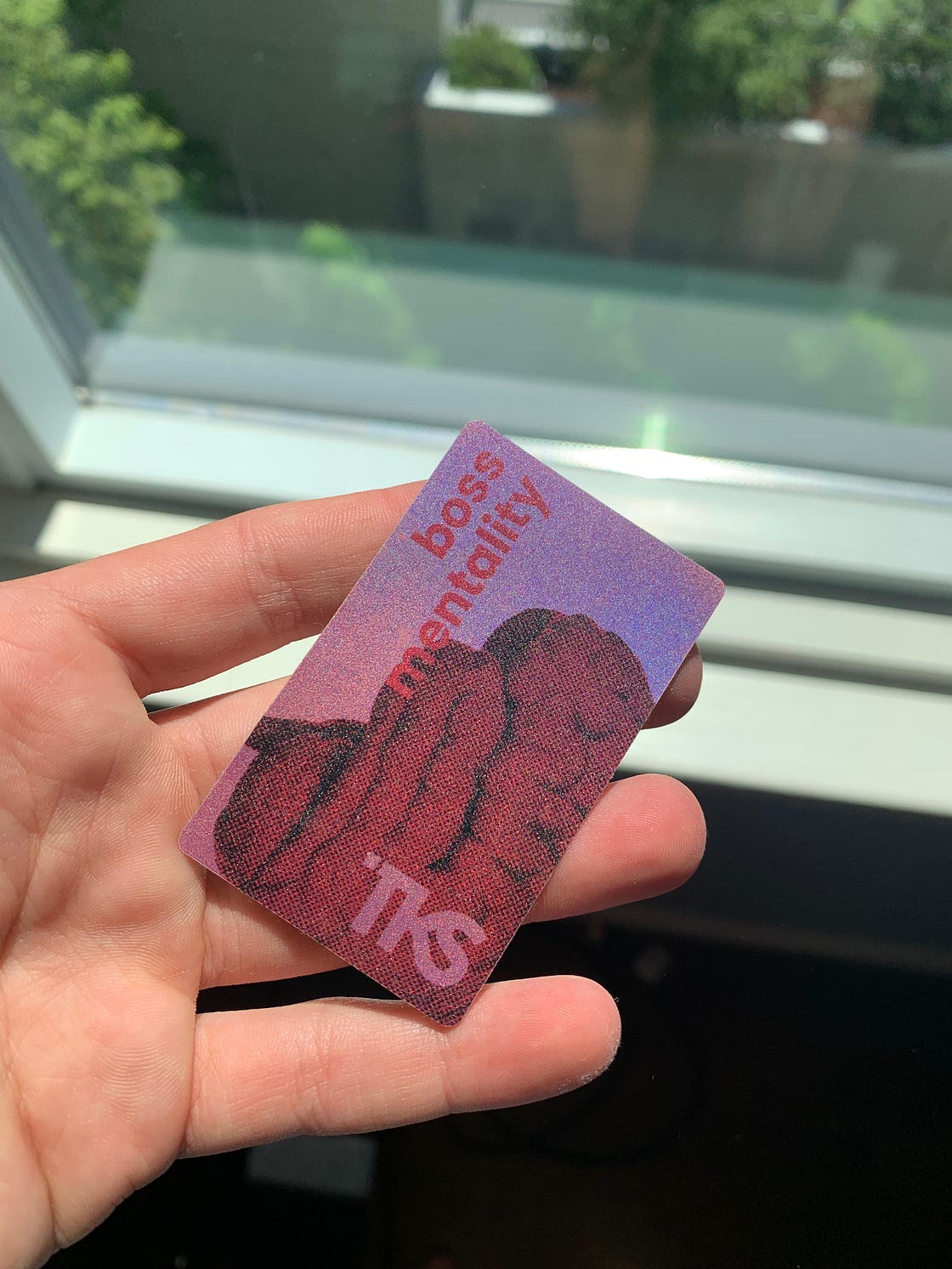
Earning the Boss Mentality Badge
I also received a sticker from Pranav, awarded to students who demonstrated a particular mindset. For example, I earned the “boss mentality” sticker after presenting to the TransLink Executive team and Board of Directors.
Working Alongside IKEA and Microsoft


TKS Challenge Sessions — my experience in depth
How the challenge season works
TKS runs two team-based challenges each year. The first is a “practice sprint” that lets you test the process; the second is the flagship, higher-stakes project. TKS supplies real prompts from partner companies, and each team chooses the one they want to tackle.
- Practice challenge: My cohort worked with IKEA.
- Final challenge: We could pick Microsoft, Samsung, or Maverick Biometals. My team went with Microsoft and explored how to make their expanding AI data-centre network both greener and cheaper to run. (Other teams addressed Samsung’s AI-powered user experience and Maverick’s enzyme-production scale-up.)
Working alongside IKEA and Microsoft
This consulting-style work was the highlight of my time at TKS. With classmates I’d grown close to, I led both projects as project manager, steering our market research, strategy development, and slide-deck delivery. Our recommendations reached the semifinal round twice — an outcome I’m still proud of.
What I learned
- How large companies frame problems and judge strategic proposals.
- How to communicate clear, evidence-backed ideas under tight deadlines.
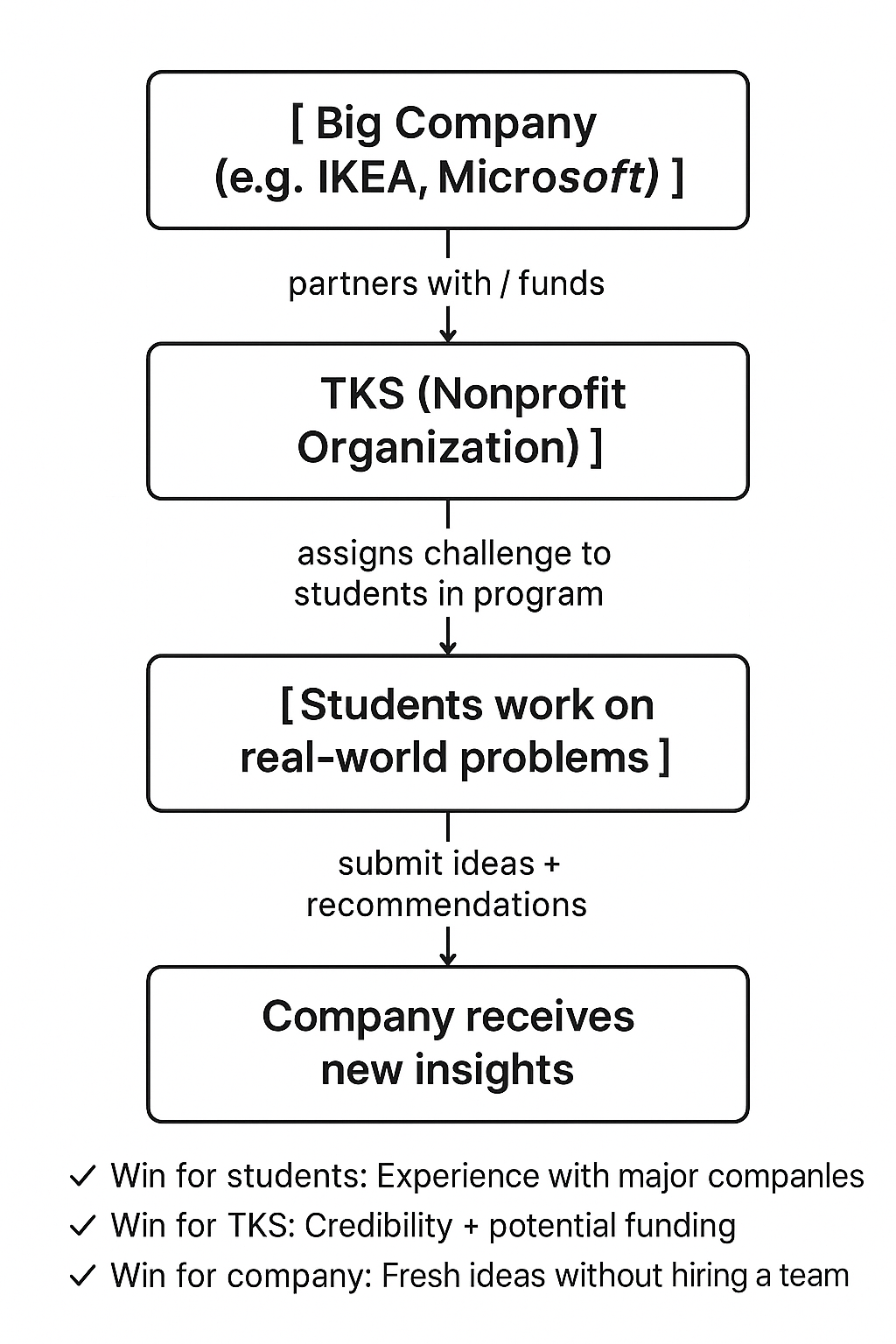
- The dynamics of value exchange in the TKS model: We’re not interns or contractors, but we do solve real problems. Students gain hands-on experience, companies receive fresh perspectives, and TKS (a nonprofit) earns credibility, often unlocking funding to sustain the cycle. The setup prompted me to think critically about who benefits most and how the impact is measured in the long term.
Deliverables:
IKEA Challenge:
Microsoft Challenge

Web Summit Vancouver: Putting a Year of Training to Work
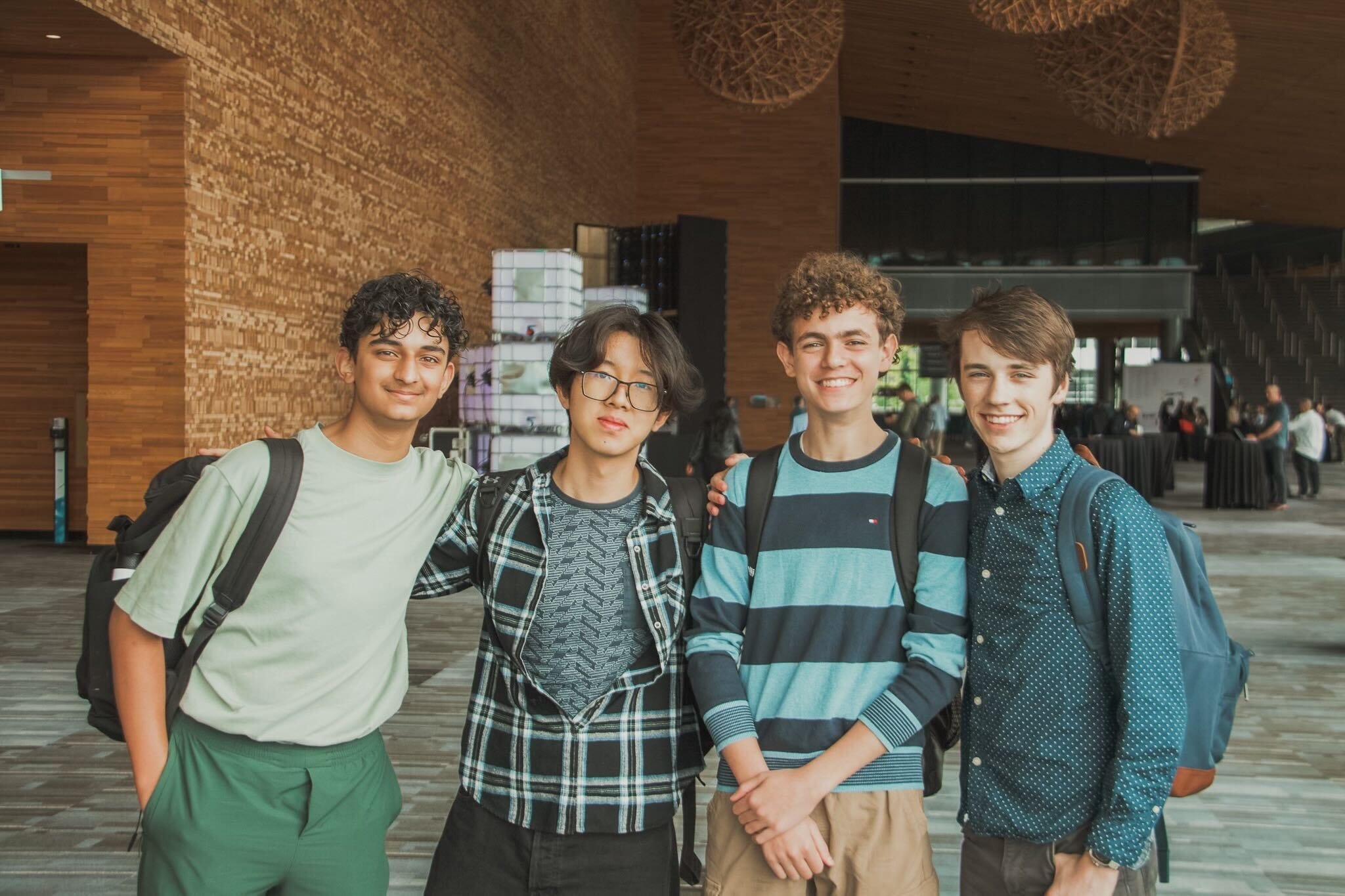
Several of us top TKS performers earned invitations to the inaugural 2025 Web Summit in Vancouver, where standard tickets began at $800 CAD. Thanks to Jennah Dohms, a TKS staff member and Summit speaker, we also gained access to the speakers’ lounge — a benefit valued at approximately $4,000.
Rather than a simple field trip, this was a real‑world testing ground. After nearly ten months of mastering outreach, networking on LinkedIn, and internalizing Velocity mindsets such as a bias toward action and stoicism, Web Summit allowed us to apply all those skills in one fast-paced environment.
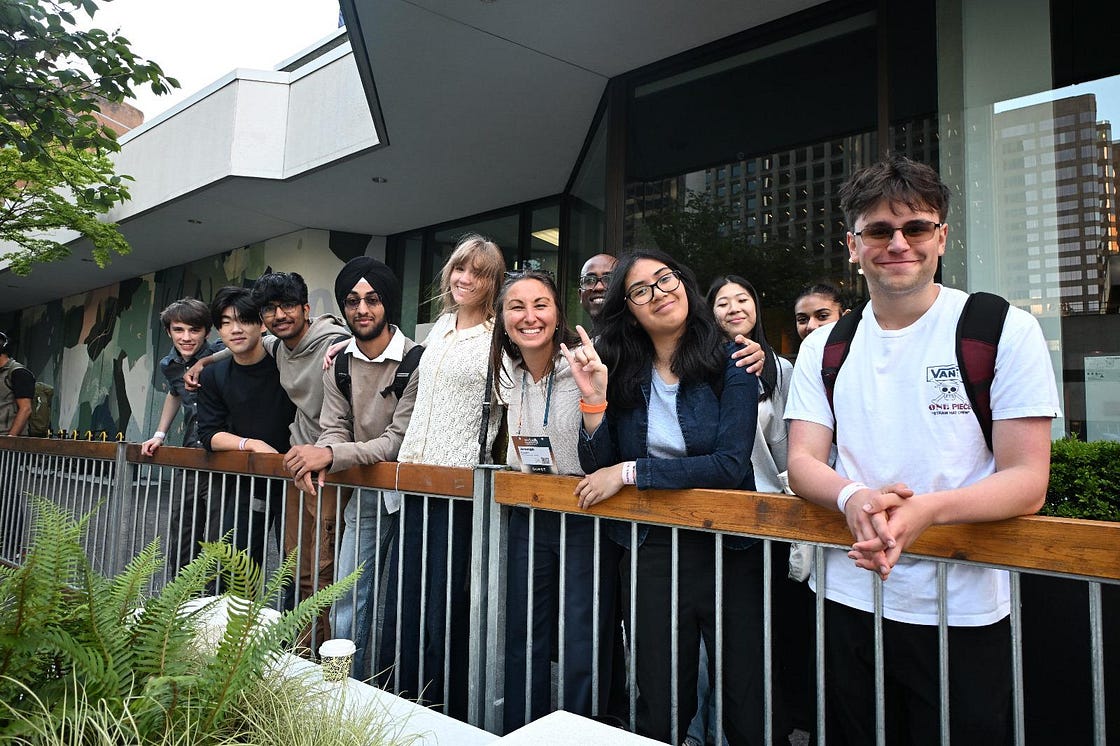
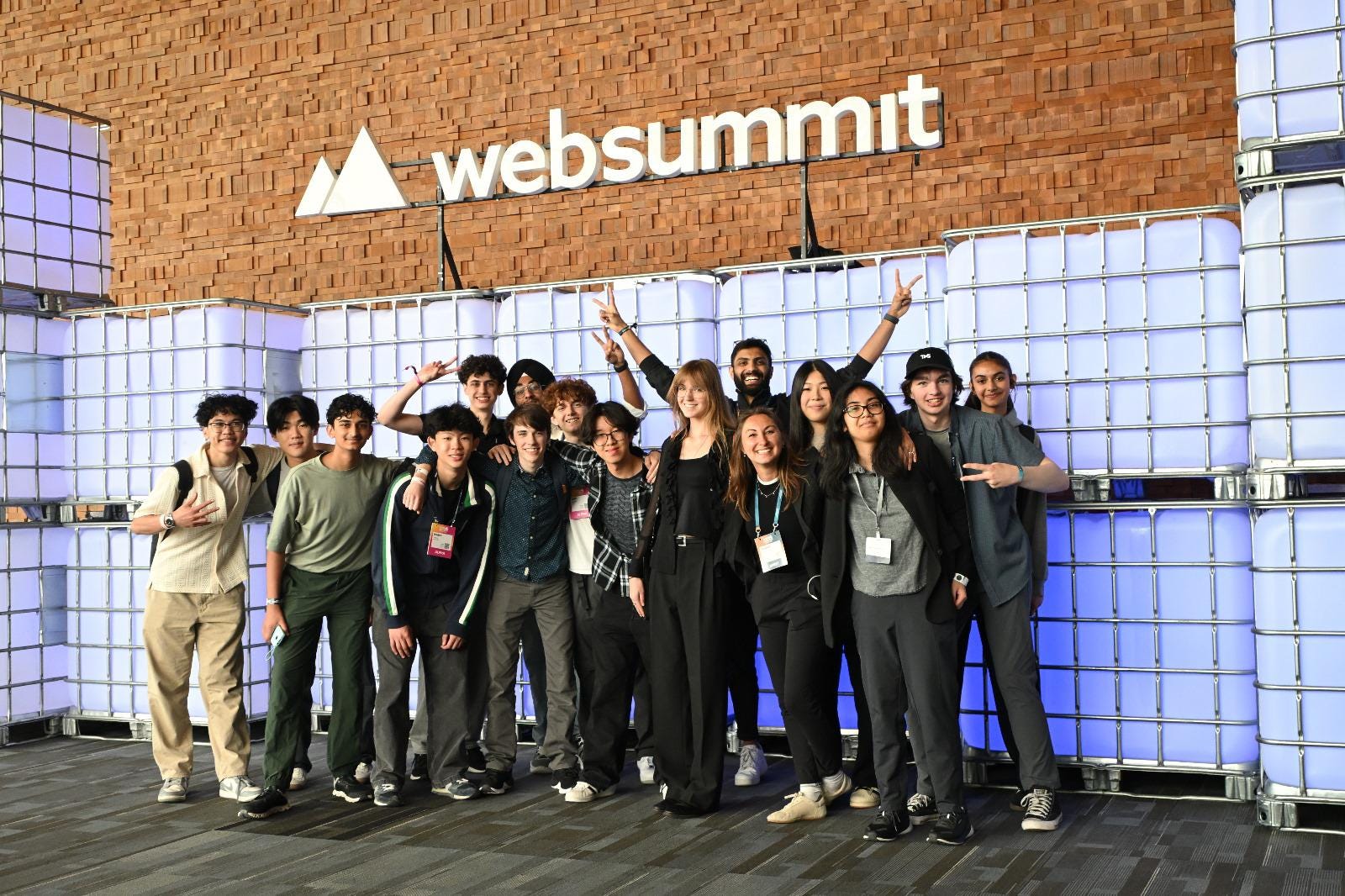

I also shared an in-depth reflection on my experience at the Web Summit. You can read it here.

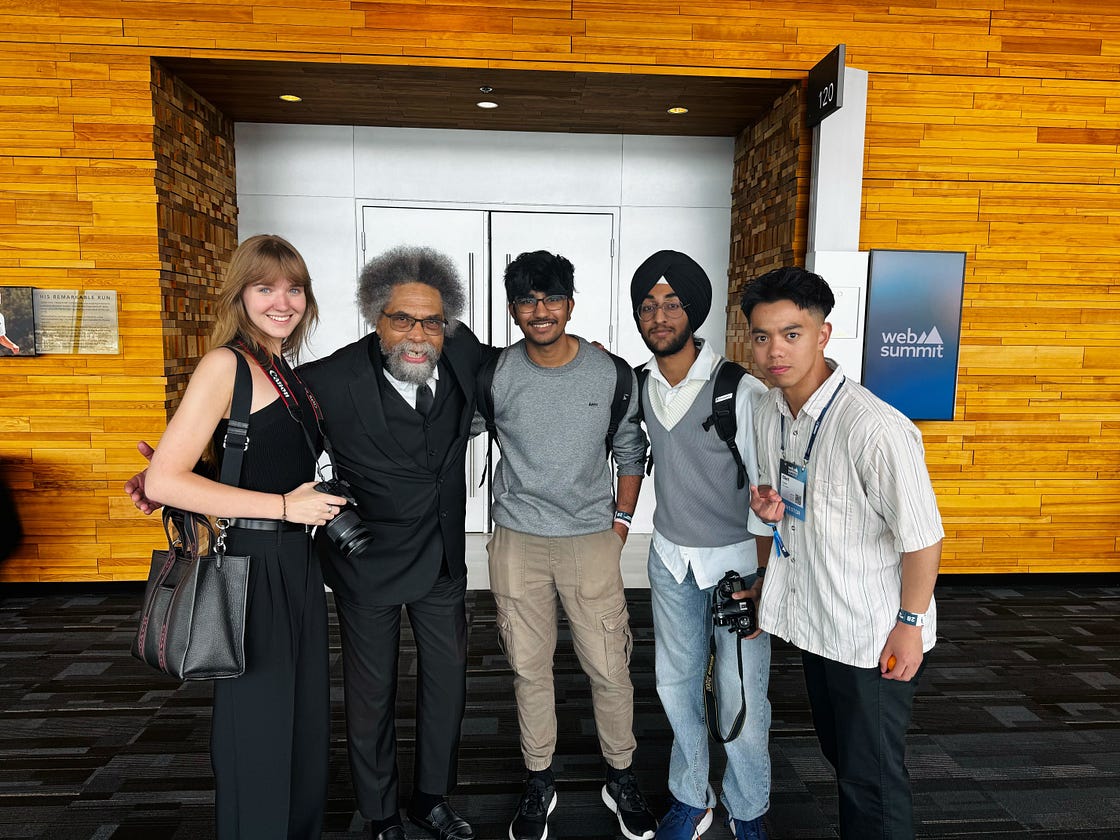
Some members of the TKS crew even had the chance to meet Cornel West!
The Good
Global friendships
TKS introduced me to a global network of peers. Through video “braindates,” I’ve met innovators from every continent, and I now recognize dozens of faces and names whenever a new cohort assembles. That sense of global community is priceless.
Optimized personal website
I already knew how to build a basic portfolio site, but TKS helped me refine its design, content strategy, and user experience. My site is now a polished showcase of projects, rather than a rough draft.
Mastering my calendar
Early in the program, Pranav led a one-on-one “brainpod” session that revealed how much time I wasted on phone distractions. That wake‑up call convinced me to adopt a strict scheduling system in Google Calendar and Tasks. Today, I operate at peak efficiency every day — an organizational habit I plan to maintain for the rest of my life.
Lifelong Slack access
Joining TKS also means lifetime membership in the TKS Slack workspace. Alumni channels remain active with job postings, project collaborations, and spontaneous “braindate” invitations. Additionally, changemakers retain full access to the TKS.life platform, where discussions on emerging technologies and networking continue long after the 10-month program concludes.
Professional Photography
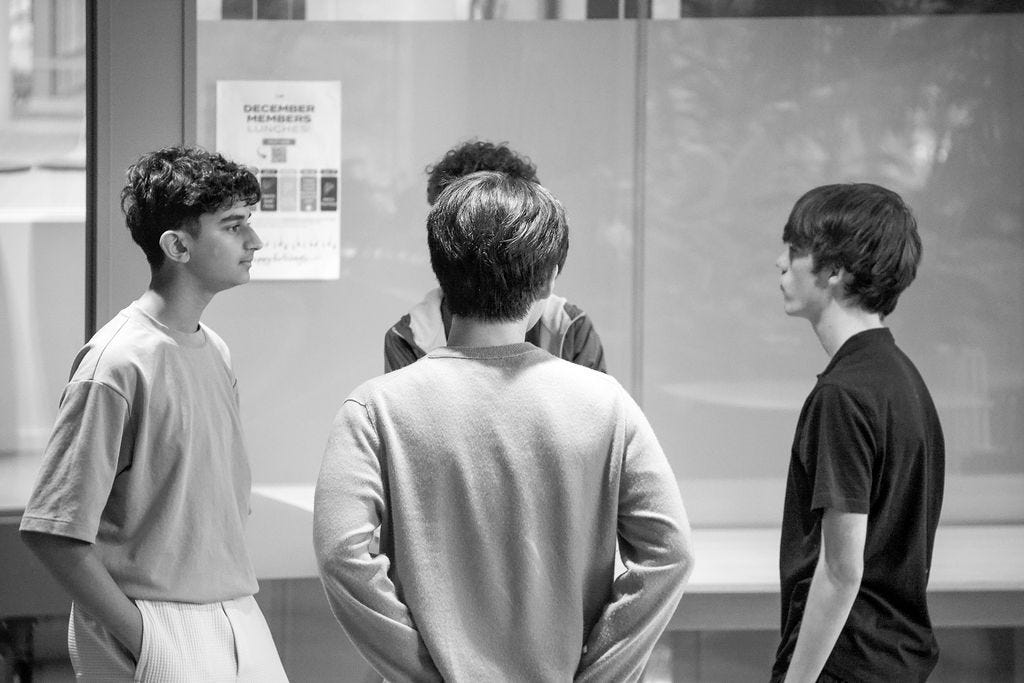
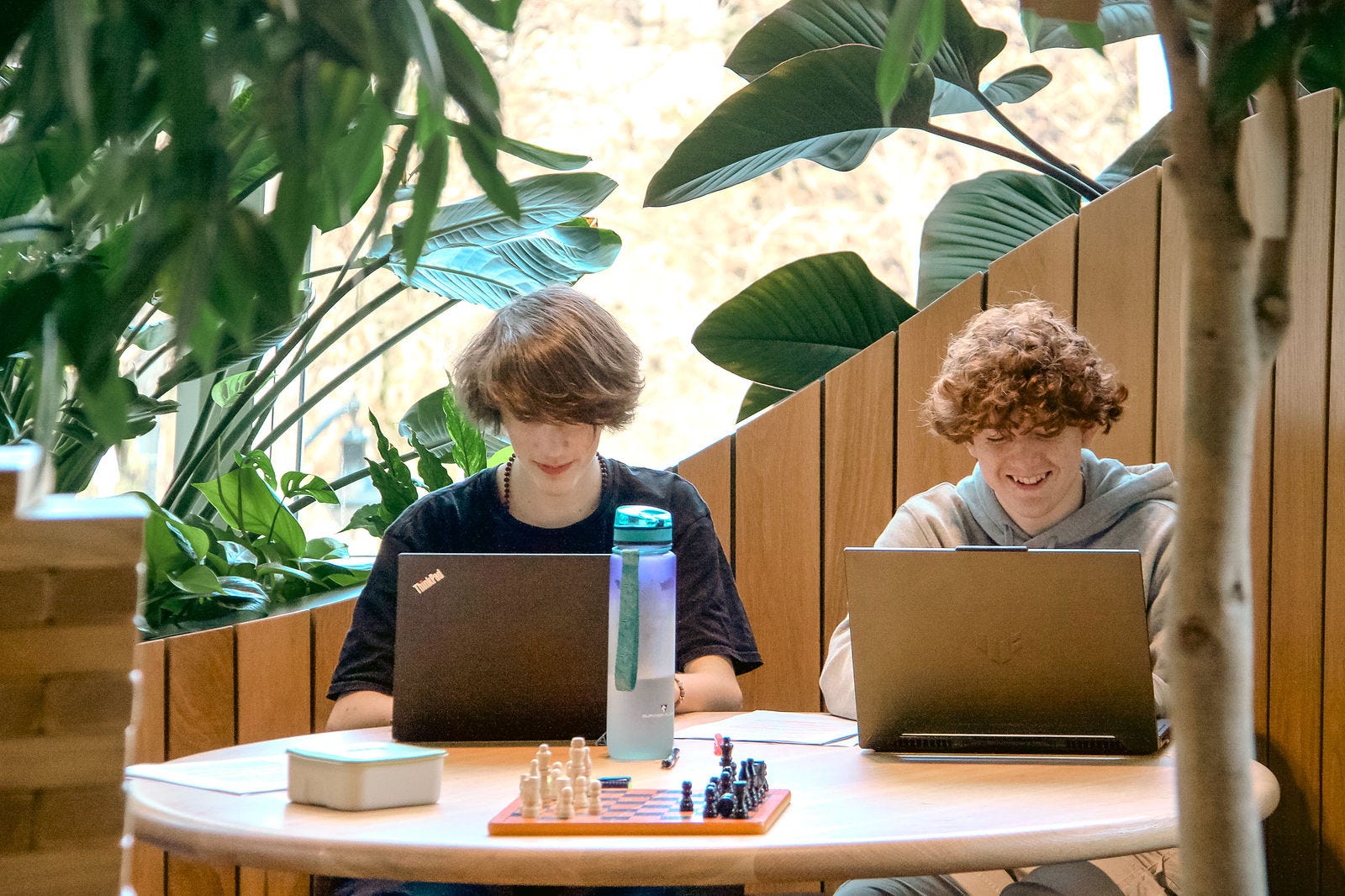
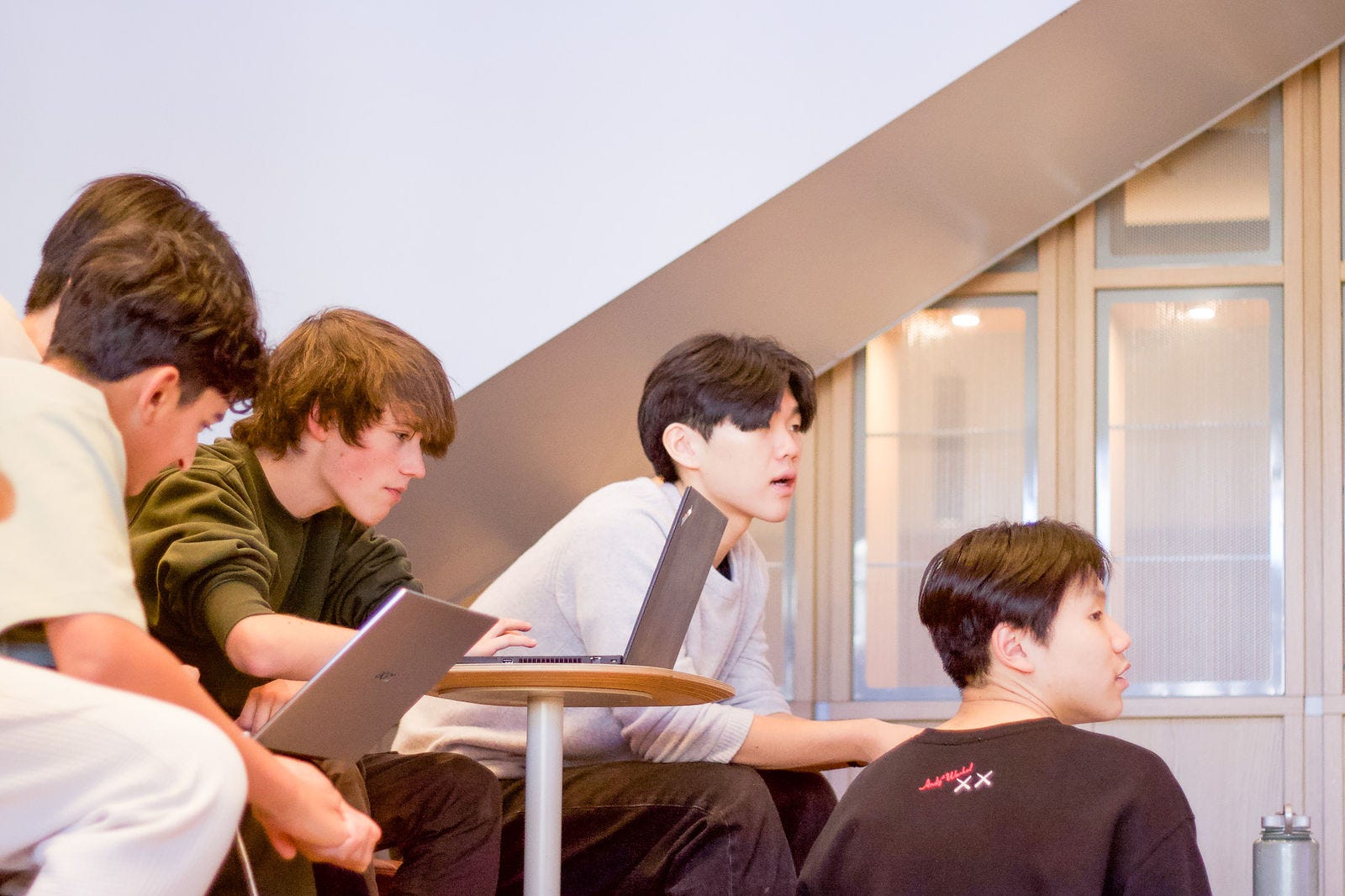
During the program, Antonina — who was both part of our cohort and shooting photos — captured us with pro-level skill and eye. She sent us the edited images afterward, giving me a set of amazing visuals I can now reuse for personal branding, outreach, pitch decks, and business promotion. Those photos turn the 10-month TKS experience into lasting, tangible assets.
Microsoft Garage Visit
In late February, our cohort was invited to tour Microsoft’s downtown Vancouver headquarters — a visit arranged by John Westworth, the local Microsoft Garage director and a long‑time supporter of TKS. We learned how Microsoft Garage runs the world’s largest private hackathon, involving over 70,000 employees and select external guests, all under a culture of “permission to fail.”
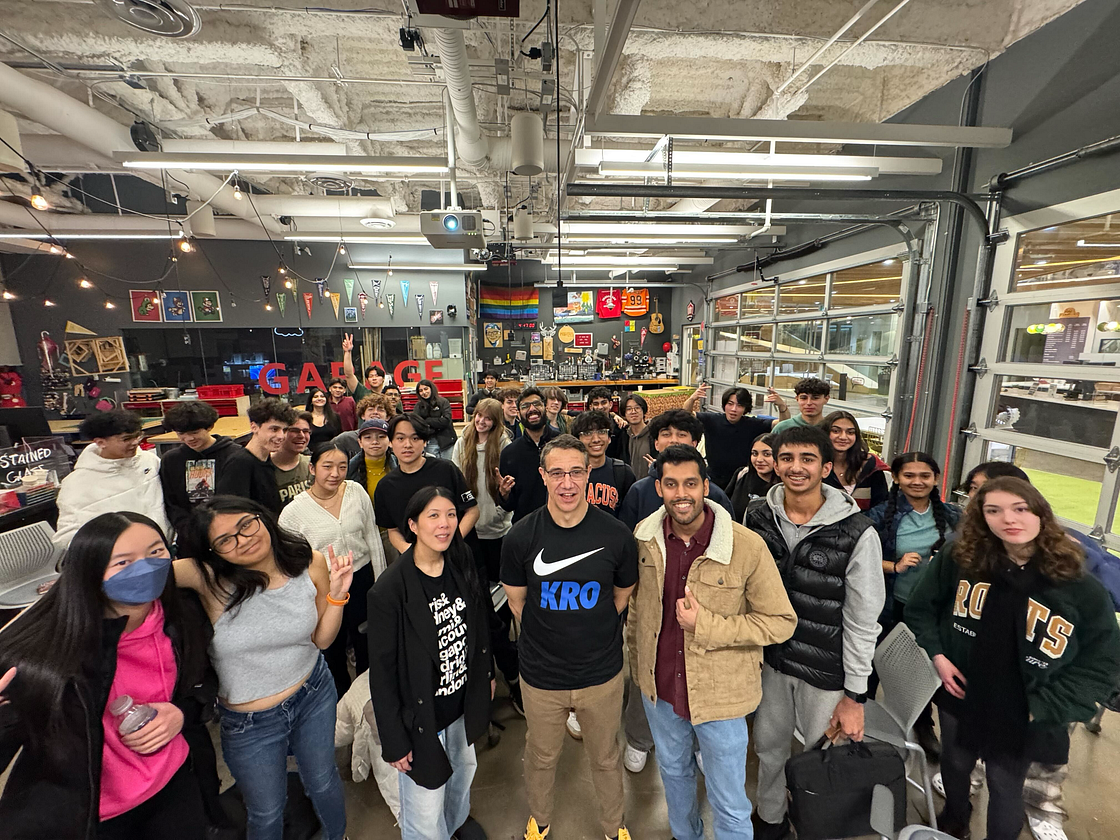
A panel discussion led by John and fellow Microsoft innovators covered:
- Innovation equals doing something new that adds value; permission to fail is oxygen.
- Three levers for any successful initiative: employee growth, network, and visibility — always stay on the sharing side rather than the bragging side.
- Be interested, not interesting — the strongest relationships are built by listening and asking thoughtful questions, not by trying to impress.
Offboarding Meeting
Within the last two months of TKS, I seriously considered dropping out. I was growing bored and had little interest in the Moonshots component. Pranav granted me an exception and waived that requirement, pointing out that many students stay enrolled solely for the network and future opportunities without attending sessions. Ultimately, I decided to stay in the program.
Vancouver Emerging Technology Showcase (by TKS):
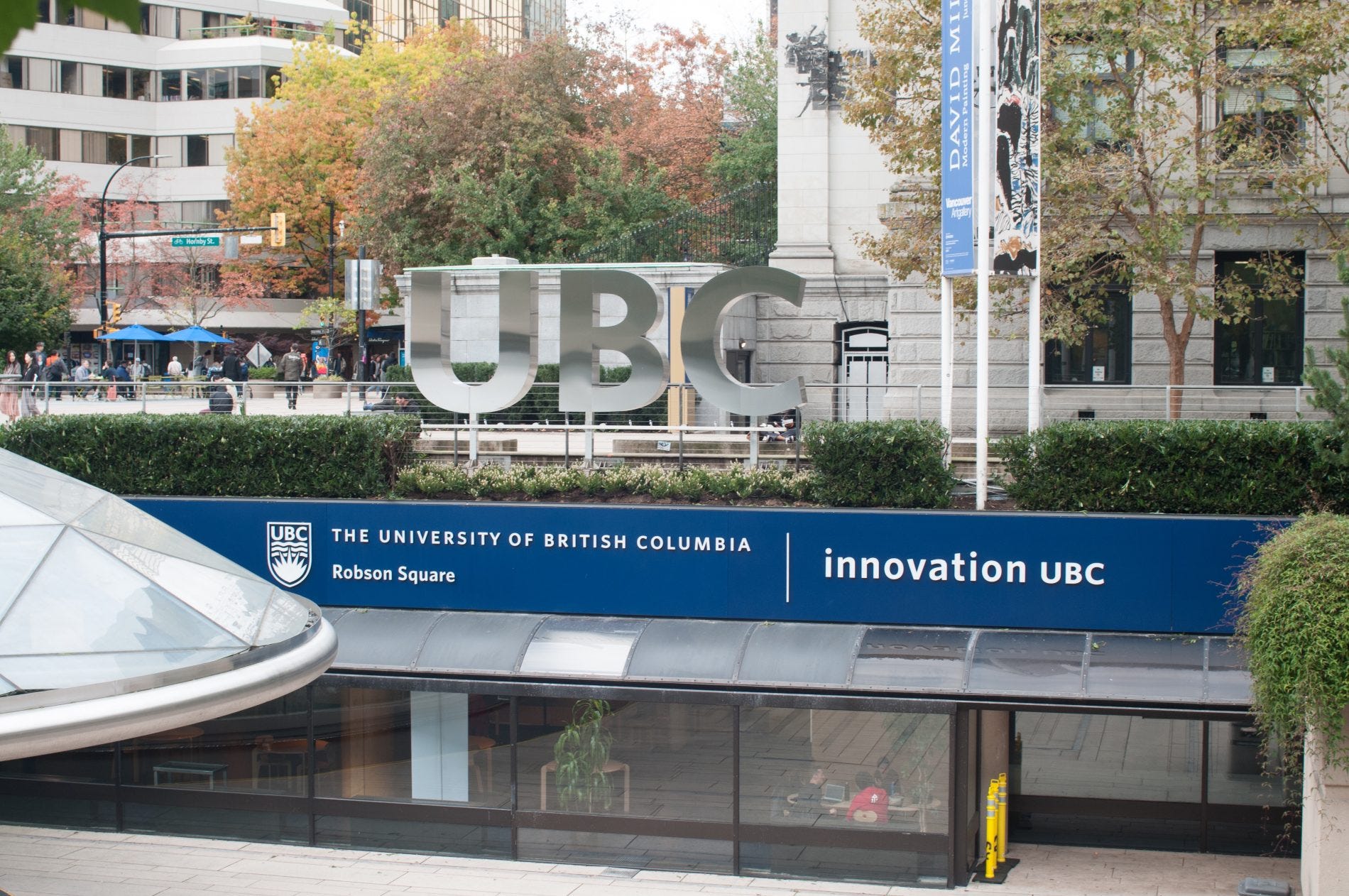
The final showcase took place on Saturday, June 14th, 2025, at UBC Robson Square. It was an incredible capstone to the year as Pranav invited me to join the student talks panel, and I even served as the moderator for that segment. The energy of seeing the cohort members present their projects, followed by live Q&A, made it one of the most memorable days of my TKS journey.
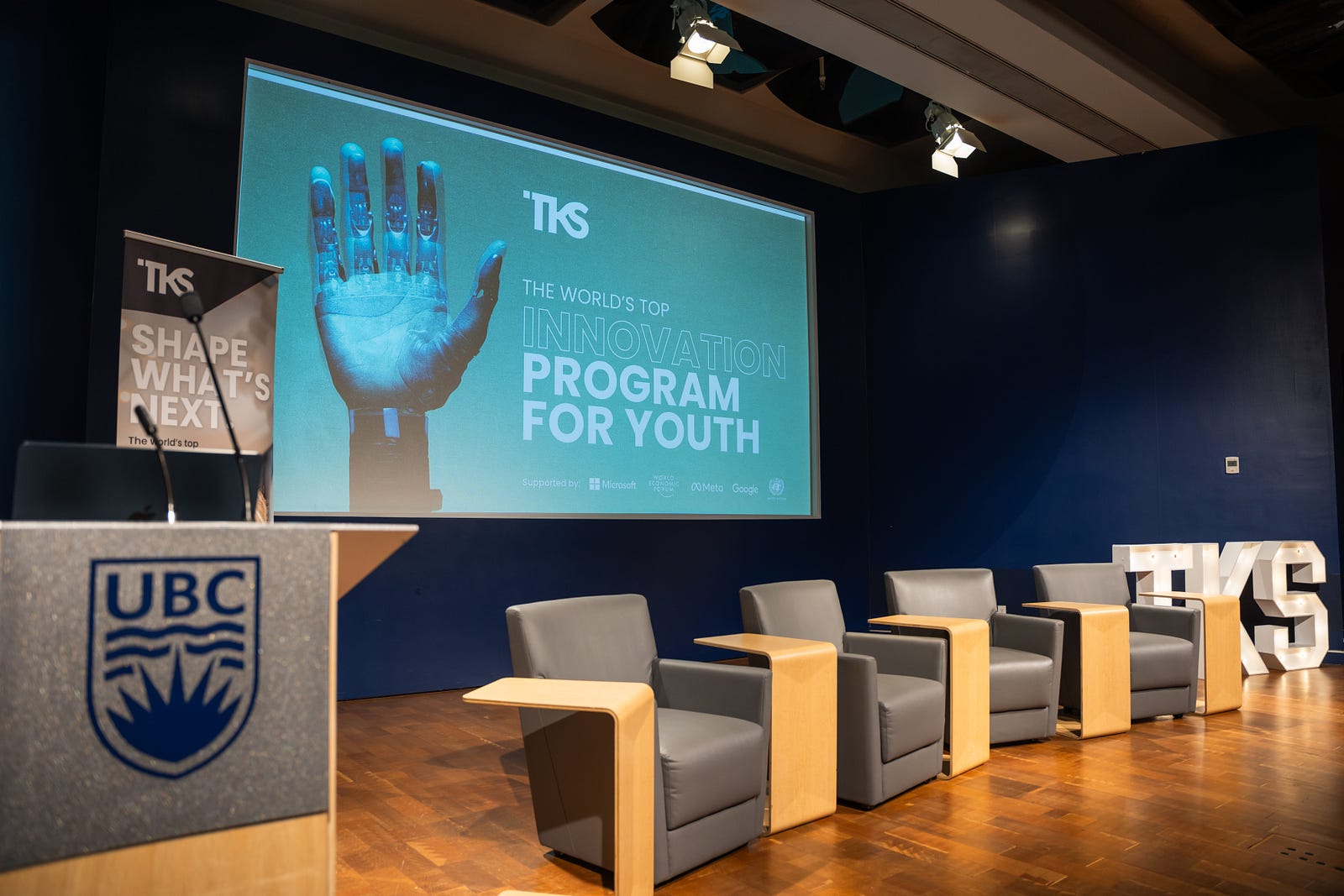
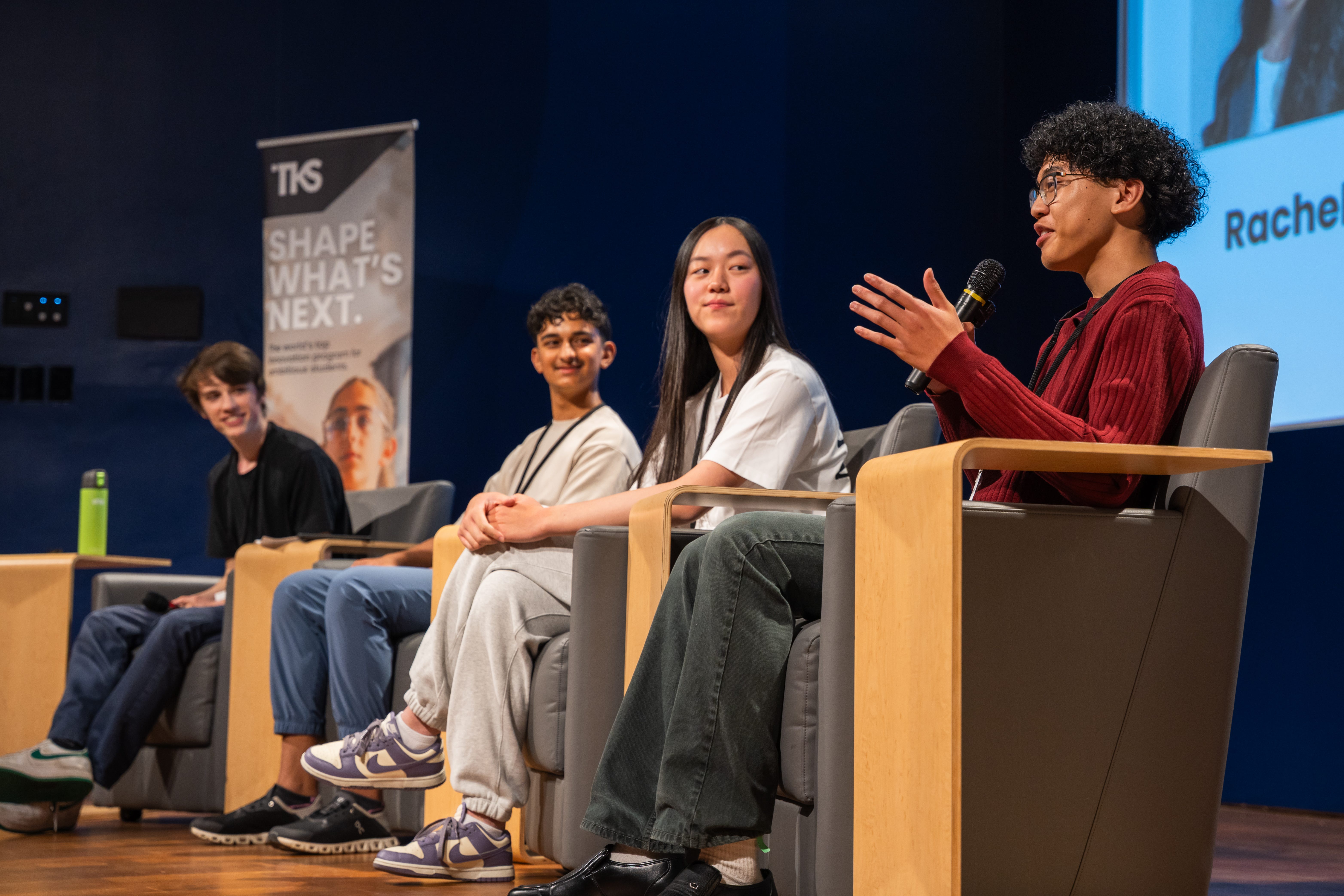


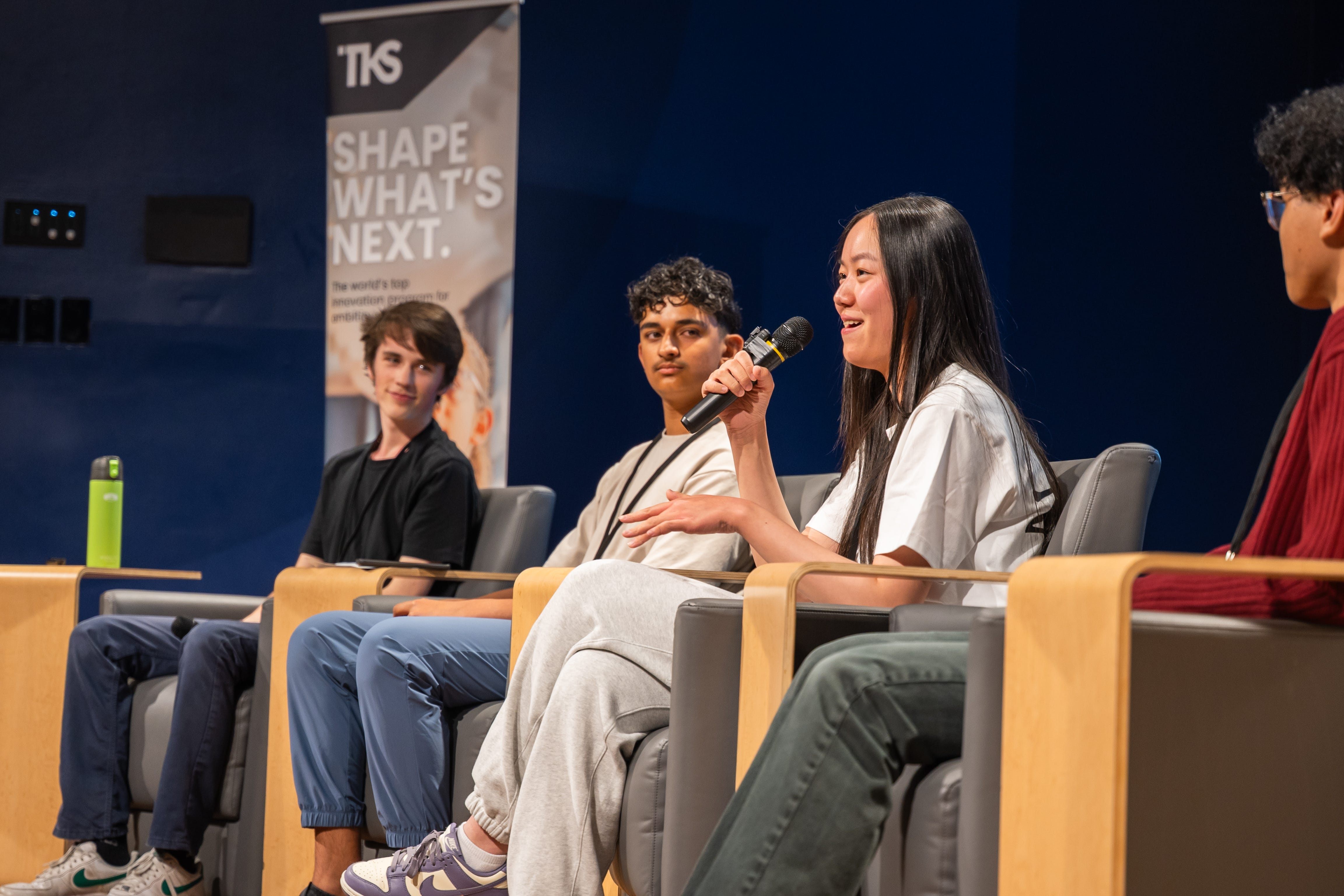
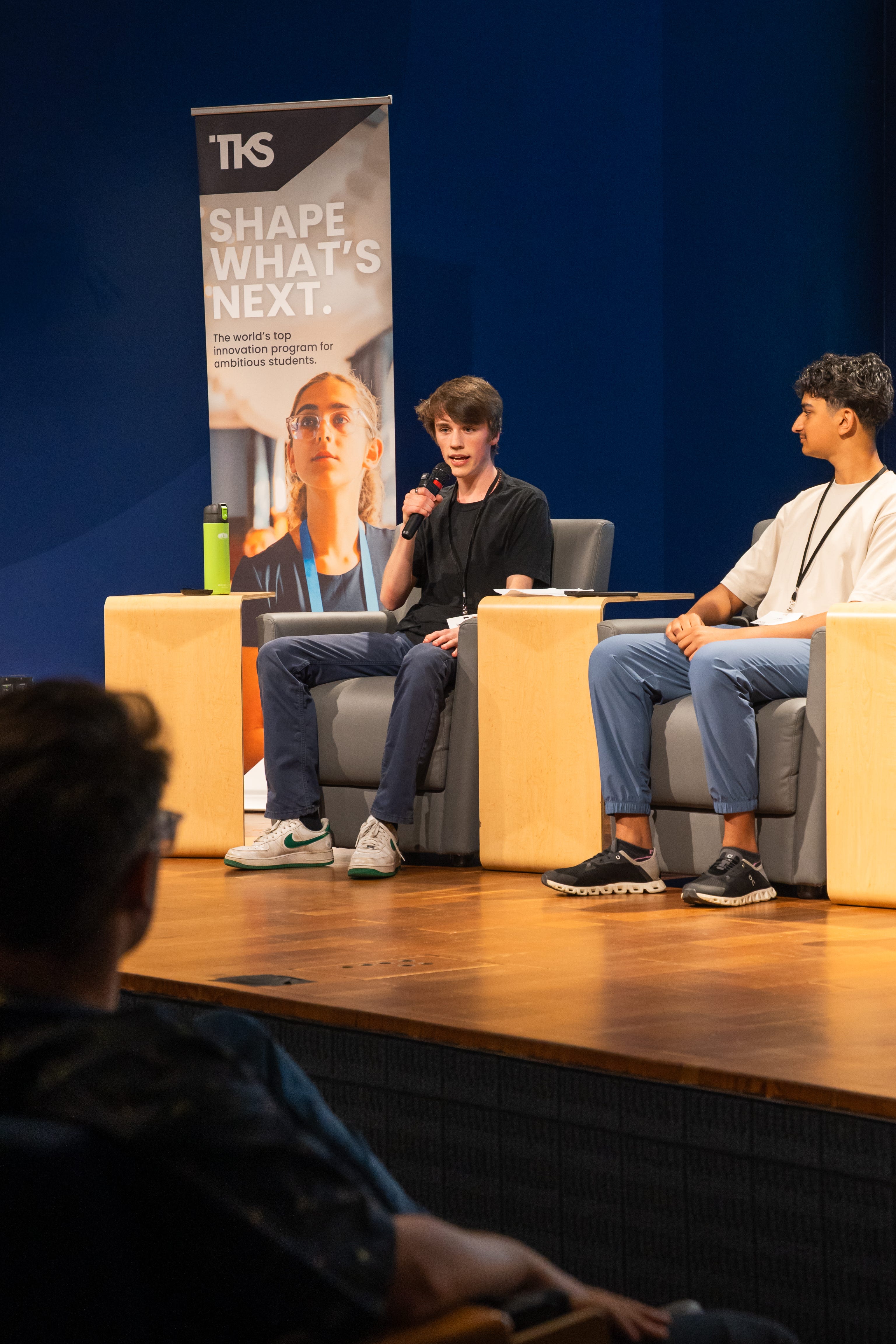

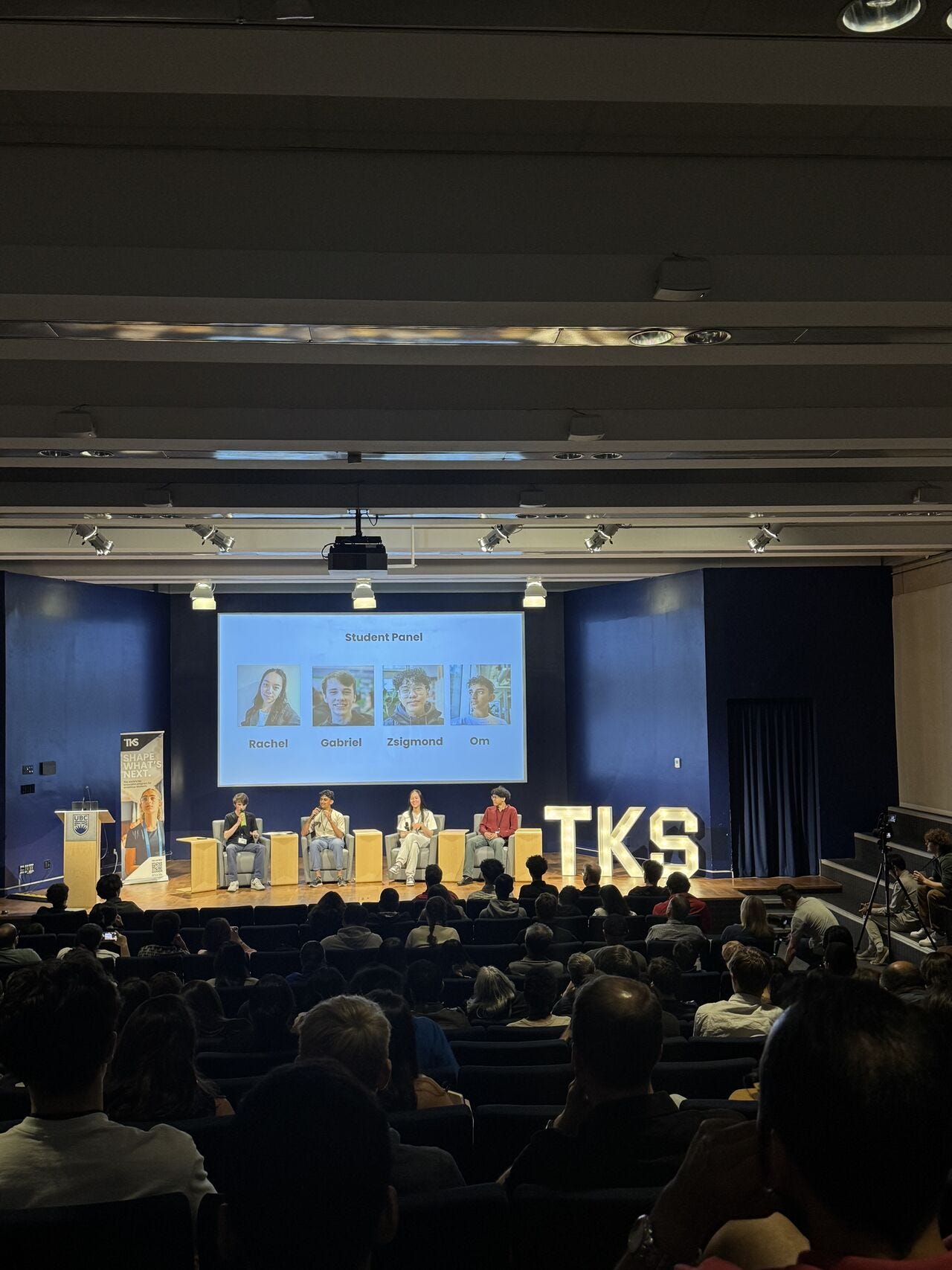

Hundreds of attendees enjoyed spotlight presentations on emerging technologies from my cohort peers.
Two keynote speakers anchored the event: John Westworth, Innovation Director at Microsoft Garage and a prominent voice in corporate hackathons, and Chris Hobbs, CEO of TTT Studios, who delivered a masterclass on turning an idea from zero to one.
Event Flow:
📸 1:30–2:00 PM — Photos + networking + arrival
📋 2:00–2:05 PM — Event Begins
🎤 2:05–2:20 PM — Student Talks (Part 1)
🧭 2:20–2:35 PM — Innovate Alley (Part 1)
🧠 2:35–2:45 PM — Keynote Speaker
🎤 2:45–3:00 PM — Student Talks (Part 2)
🧭 3:00–3:15 PM — Innovate Alley (Part 2)
🎤 3:15–3:25 PM — Student Panel (I spoke here!)
🎤 3:25–3:35 PM — Student Talks (Part 3)
📋 3:35–3:45 PM — Closing Remarks
📸 3:45–4:00 PM — Freestyle networking + goodbyes
Innovate Alley: public showcase of 10 months of TKS projects
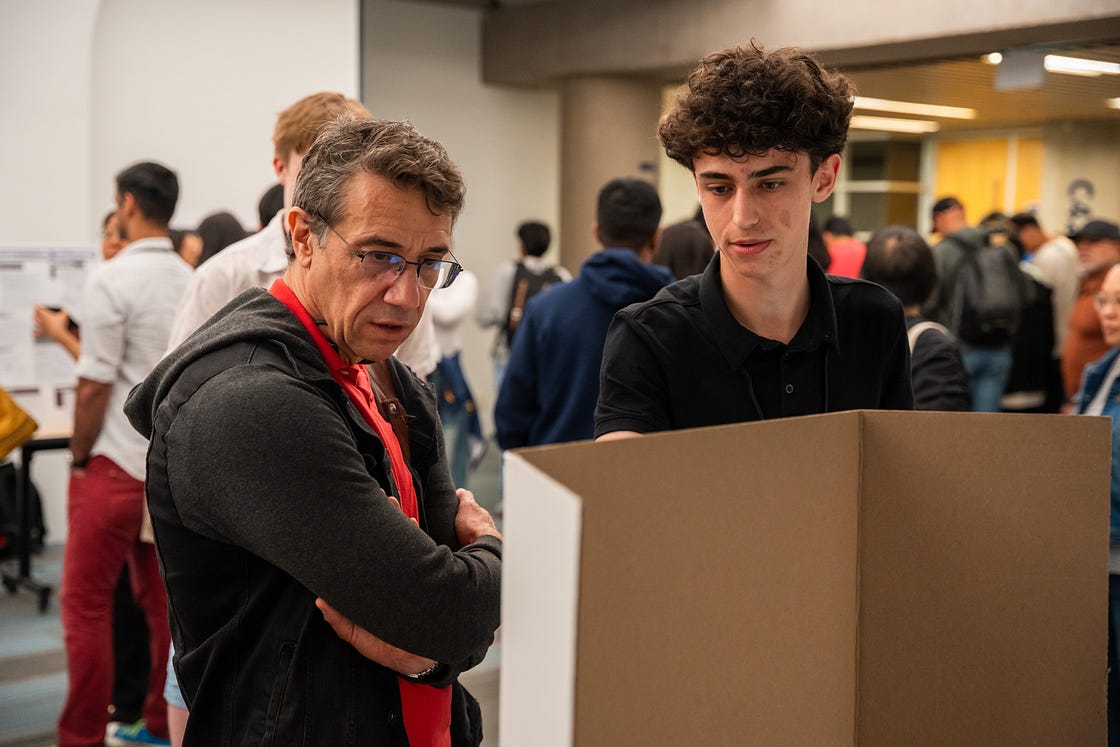
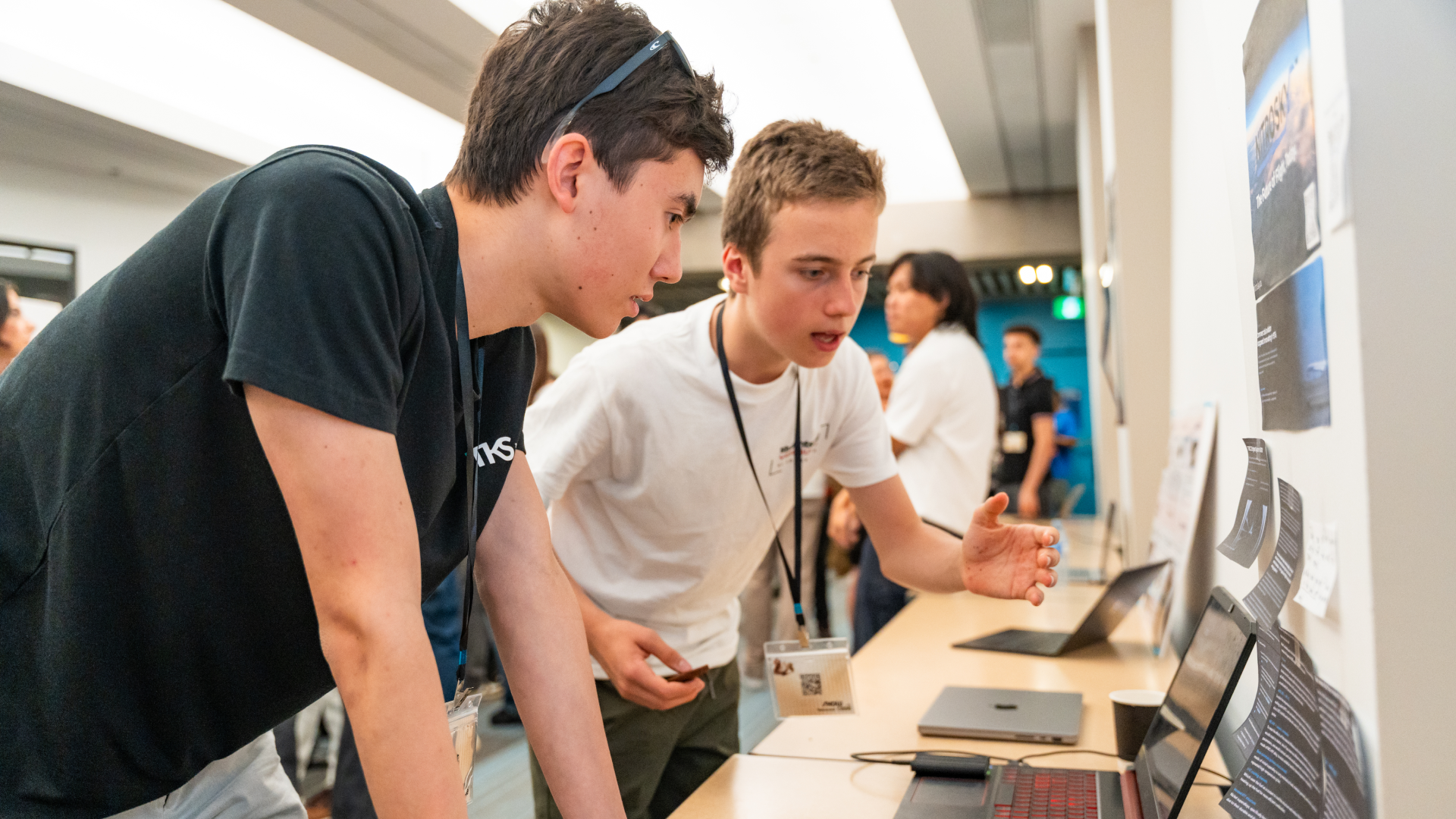
During Innovate Alley, attendees got to walk through the projects built over our 10 months at TKS — parents, investors, alumni, and future innovators were just steps away from seeing the work in person. It was an incredible opportunity to share emerging technology in real time. Professional photographers were there, so we captured high-quality images from the event. Below are some highlights.

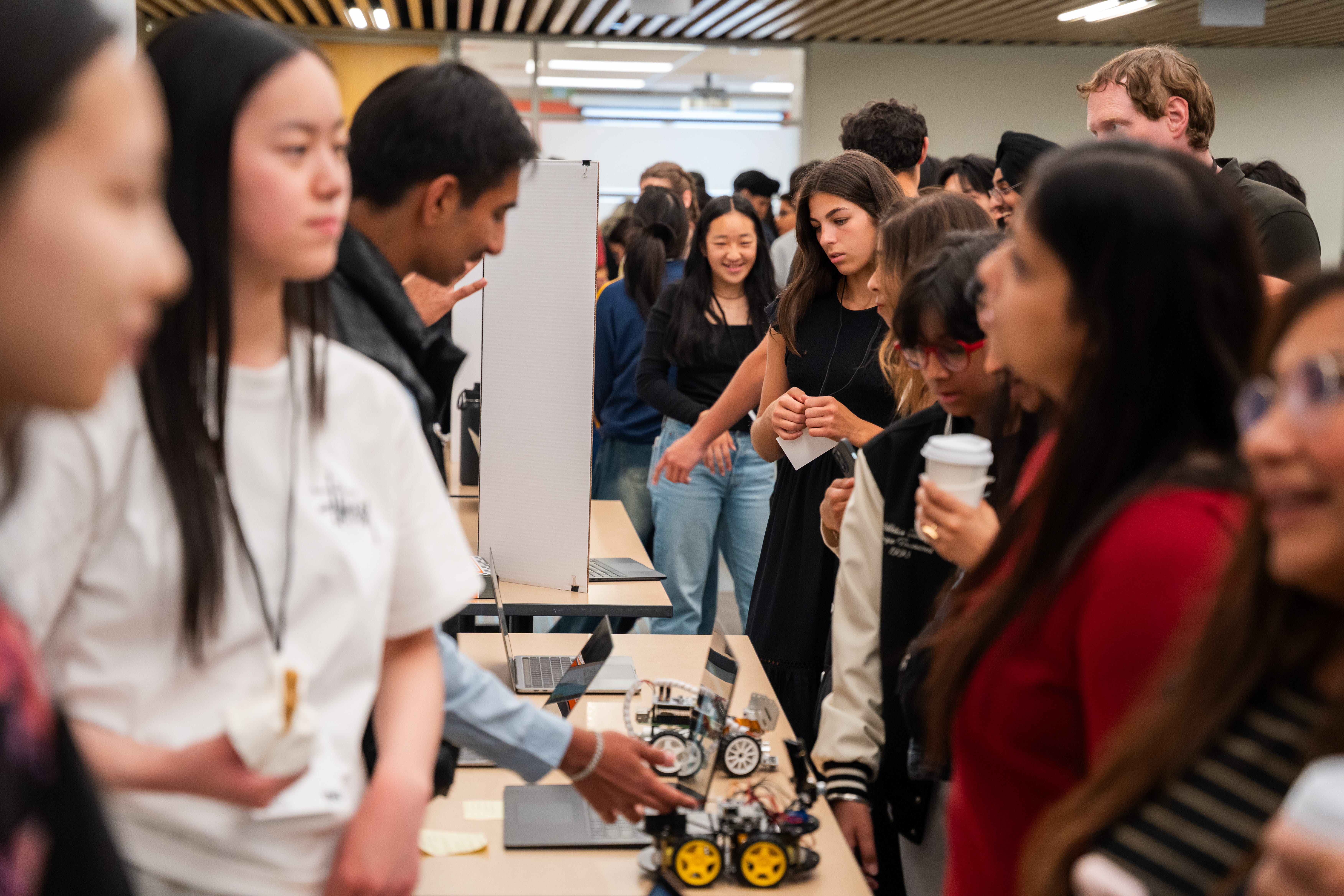
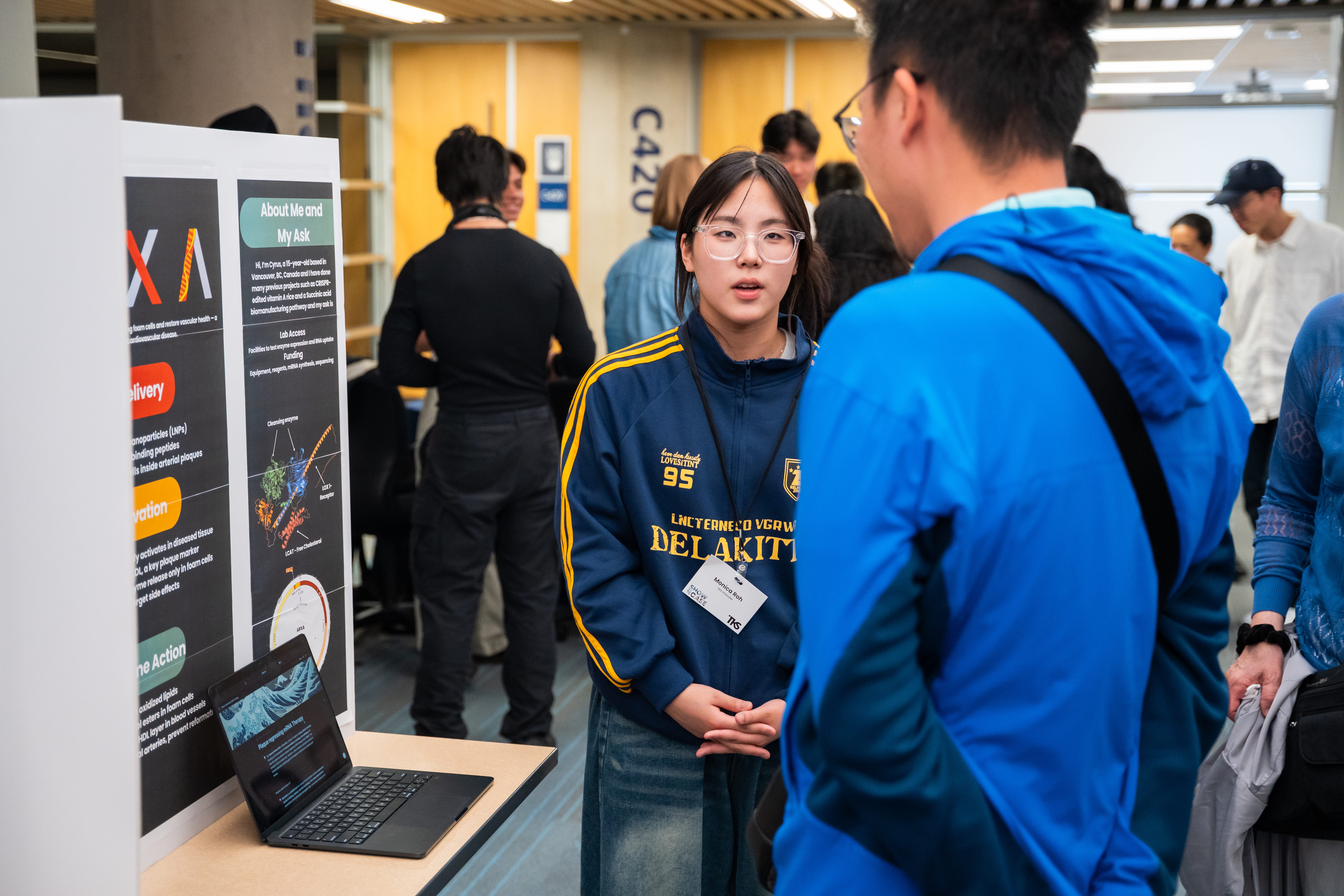

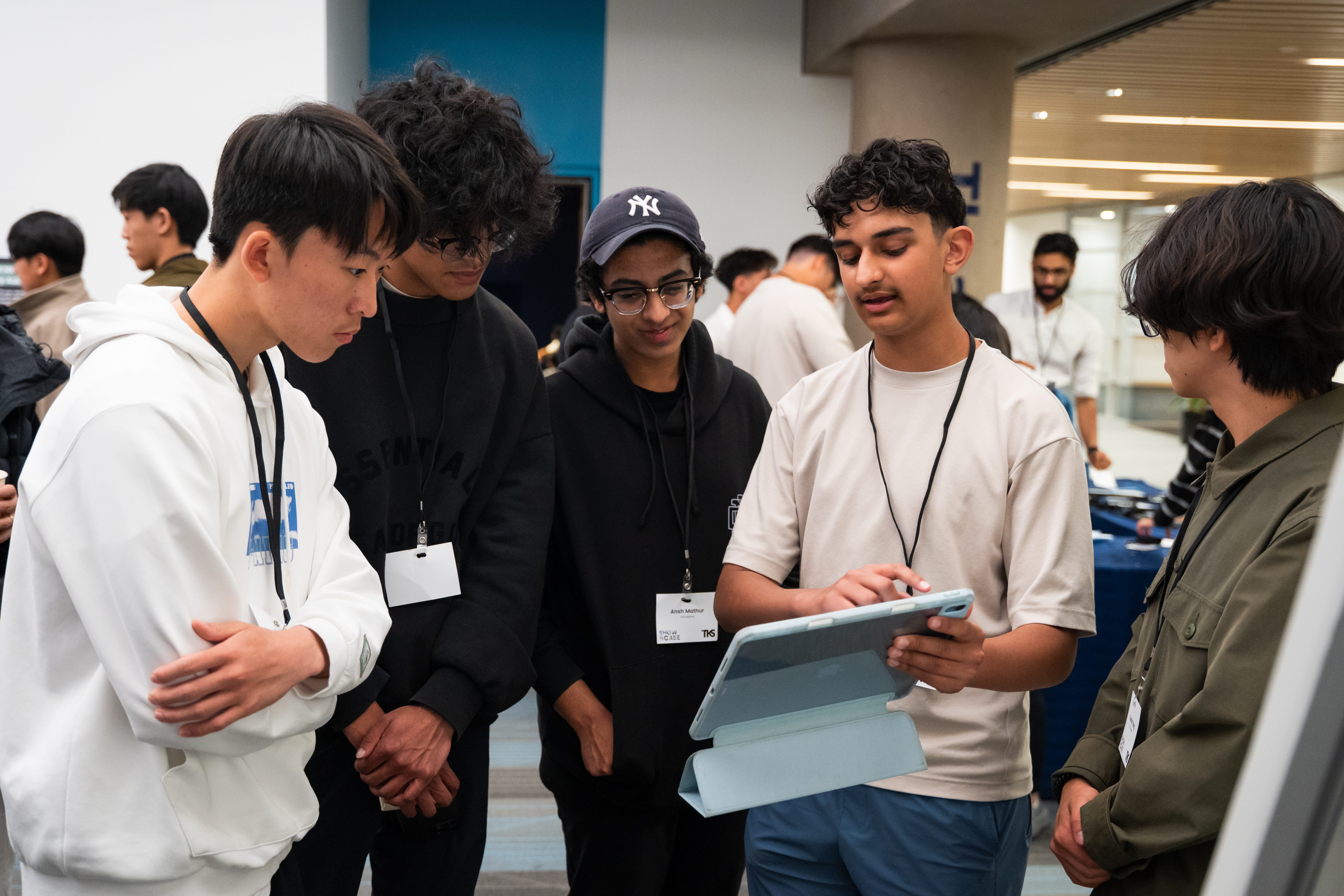
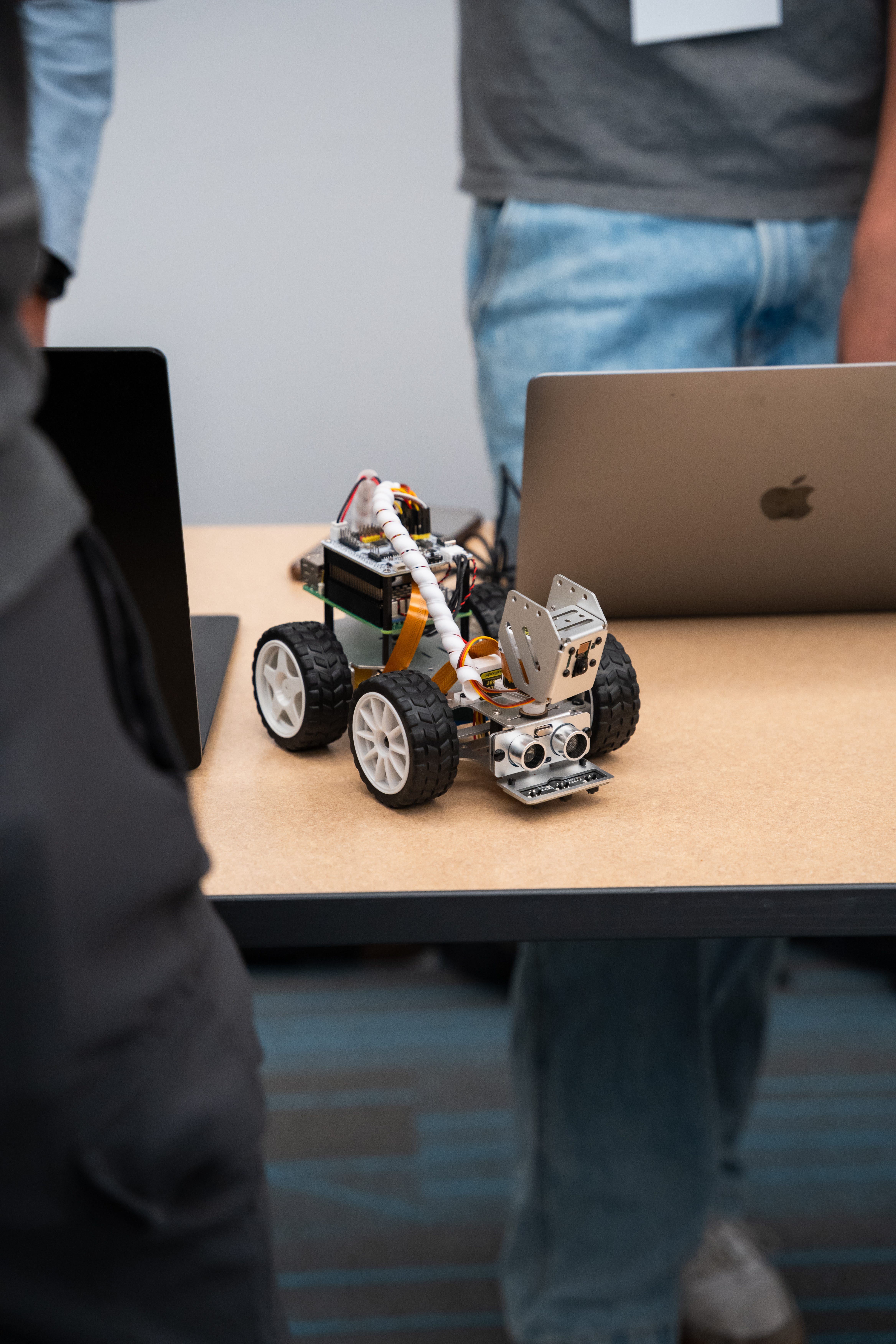
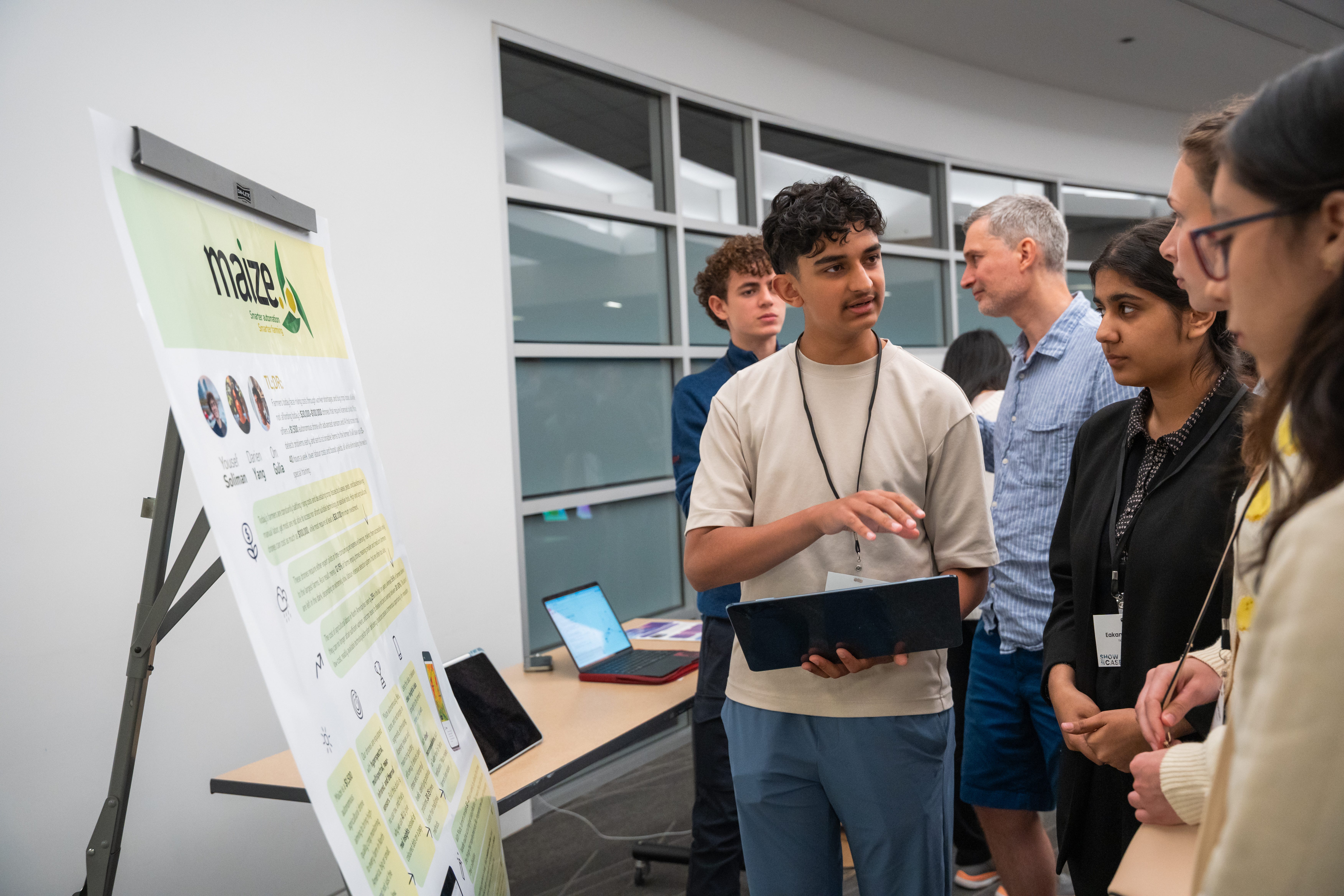

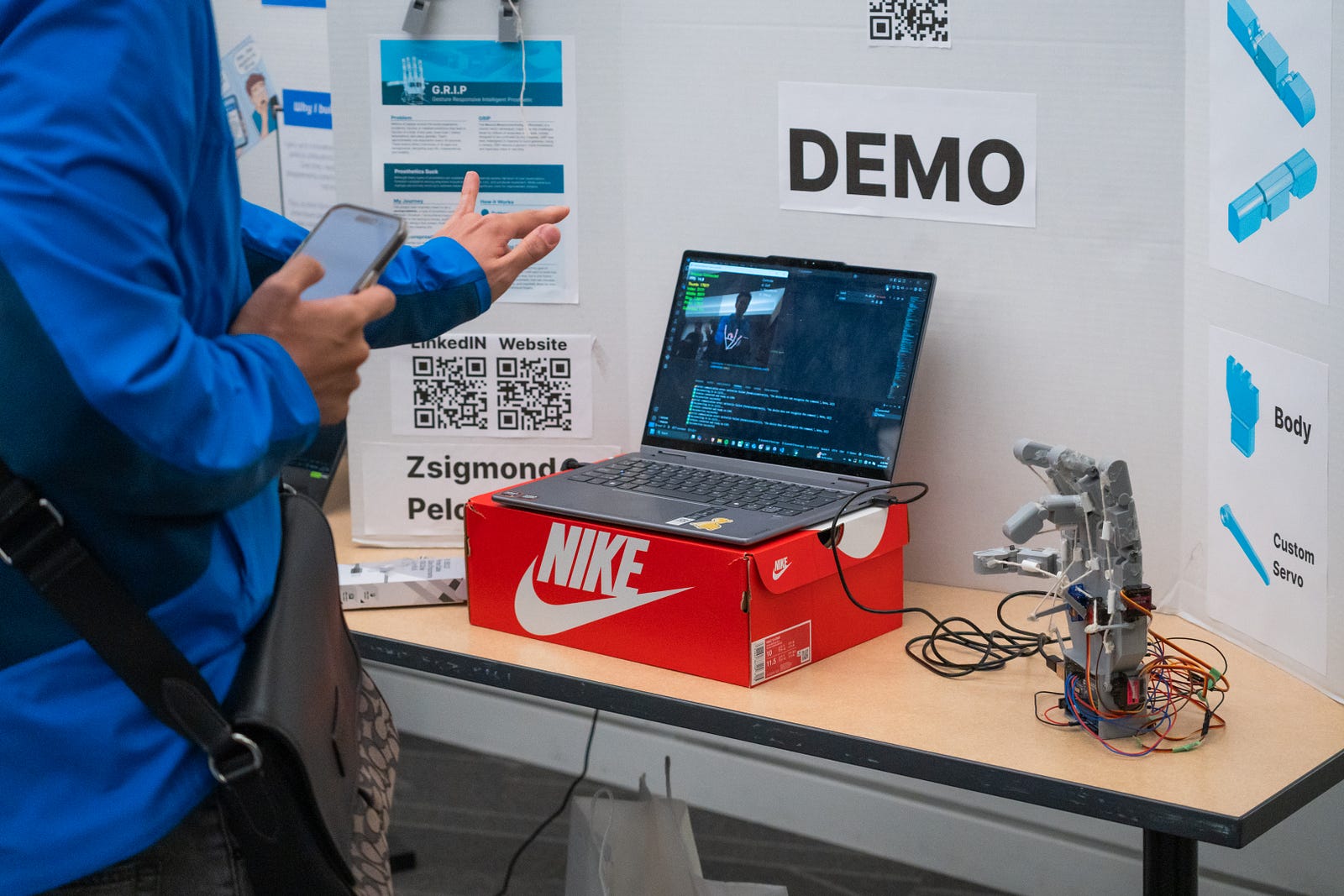
More than 250 people attended, making it one of the largest Emerging Technology Showcases hosted by TKS.

Student Talks Spotlight
Weeks before Innovate Alley, standout students with real-world, high-impact projects were selected to present. Below are a few moments from each talk.
Jugrajpal Basra and Tristan Jiang opened with their vision for a non-invasive brain-computer interface to support stroke recovery.

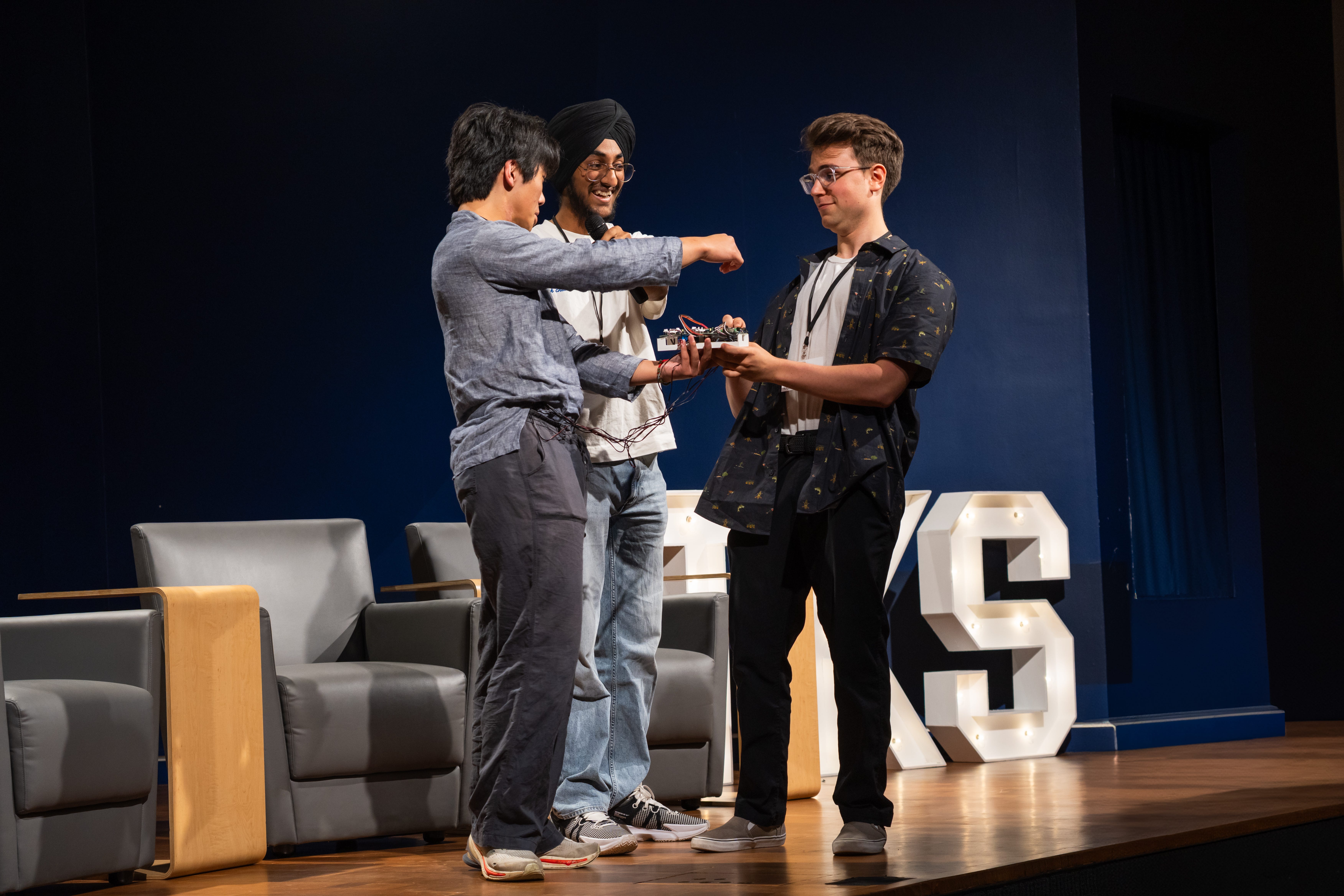
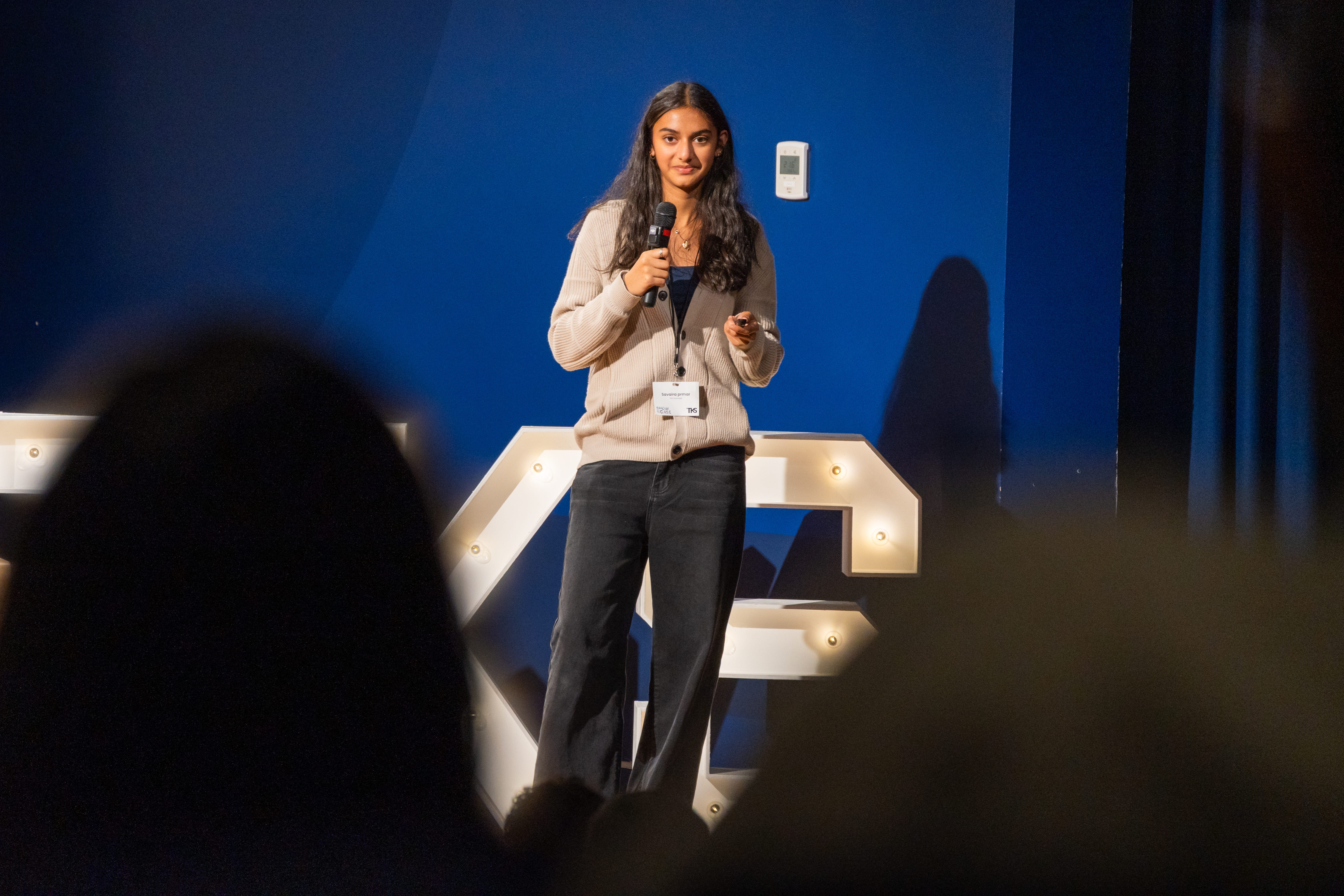
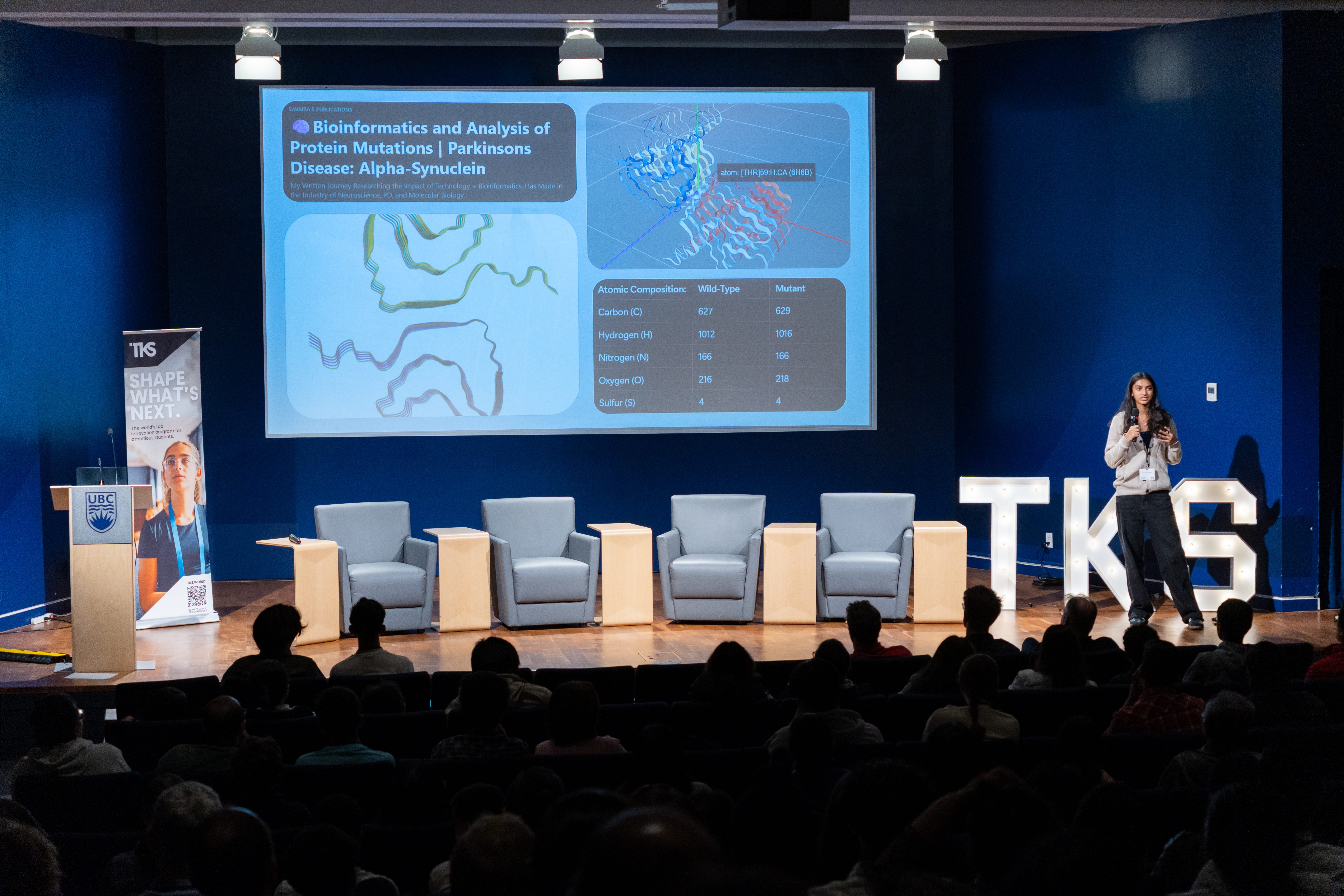
Next, Savaira dove into how AI can improve drug delivery for arthritis.
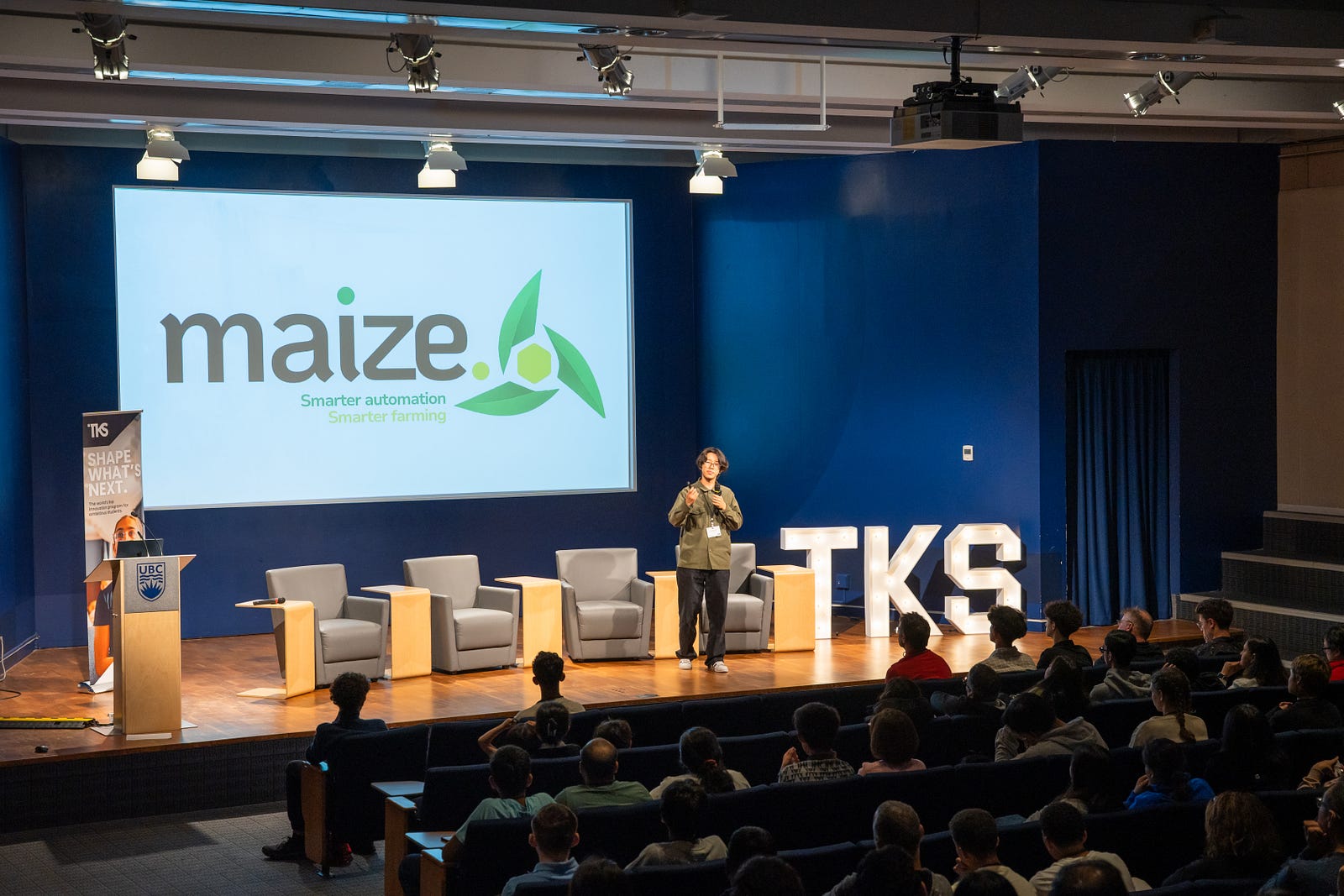
Finally, Darien traced his TKS exploration journey — from the speed and precision of Formula 1 to innovations in AgriTech.
Graduation:
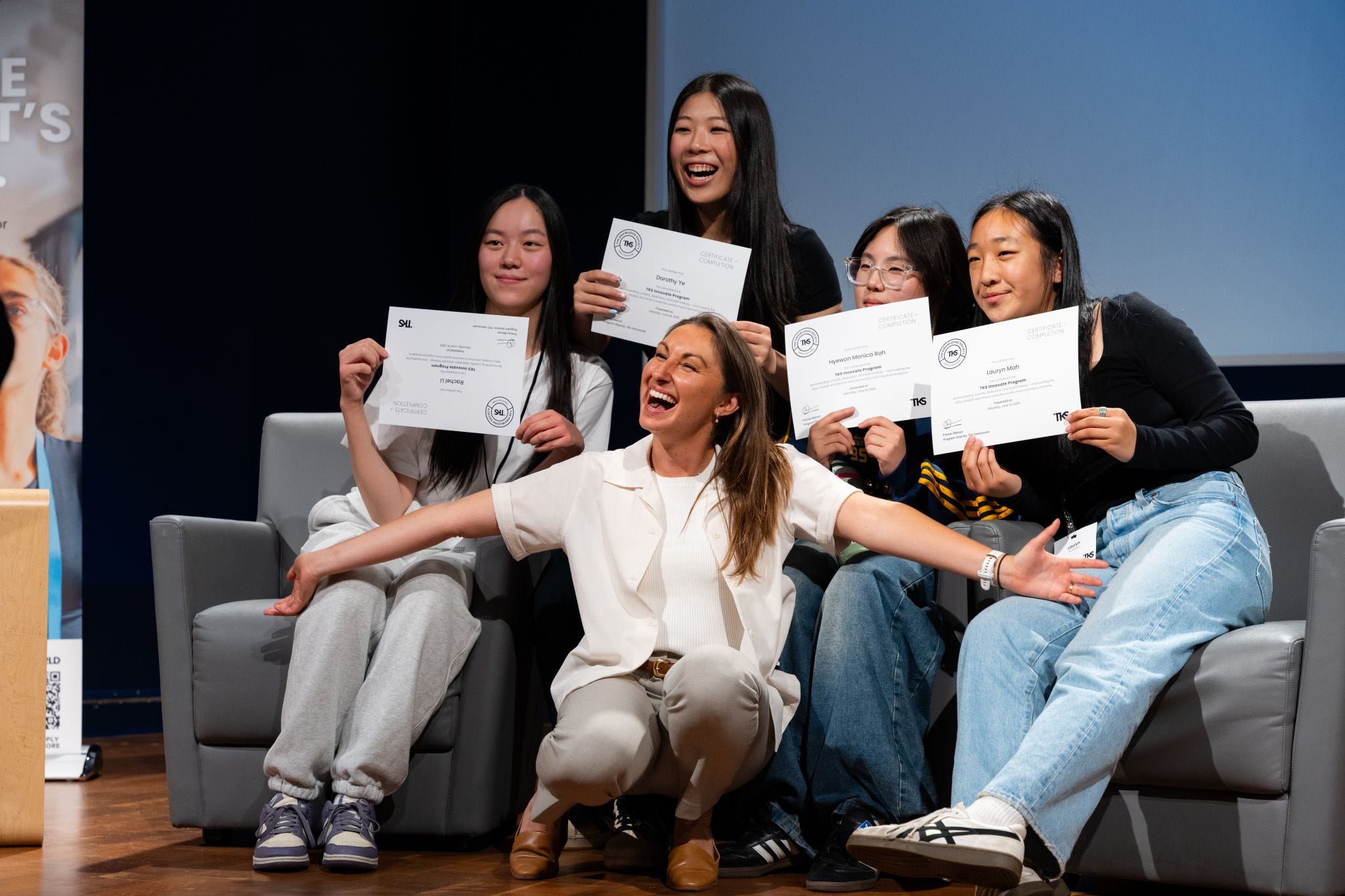
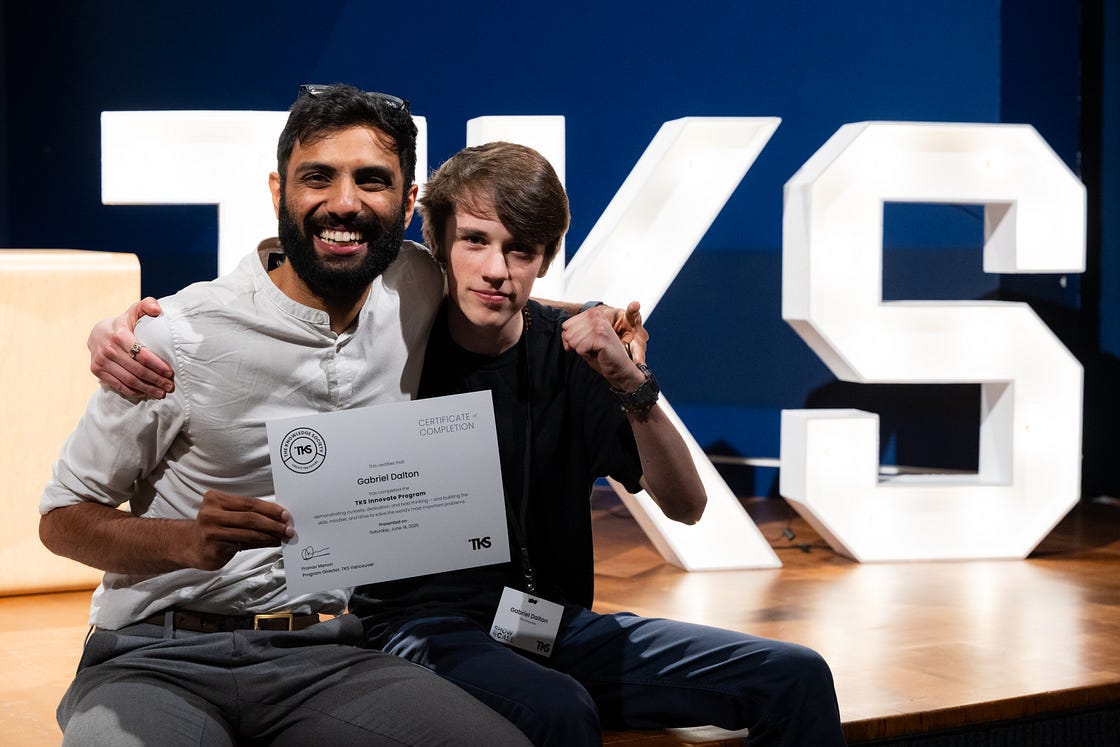
I officially graduated from TKS on Saturday, June 14th, 2025, during the Vancouver Emerging Technology Showcase.

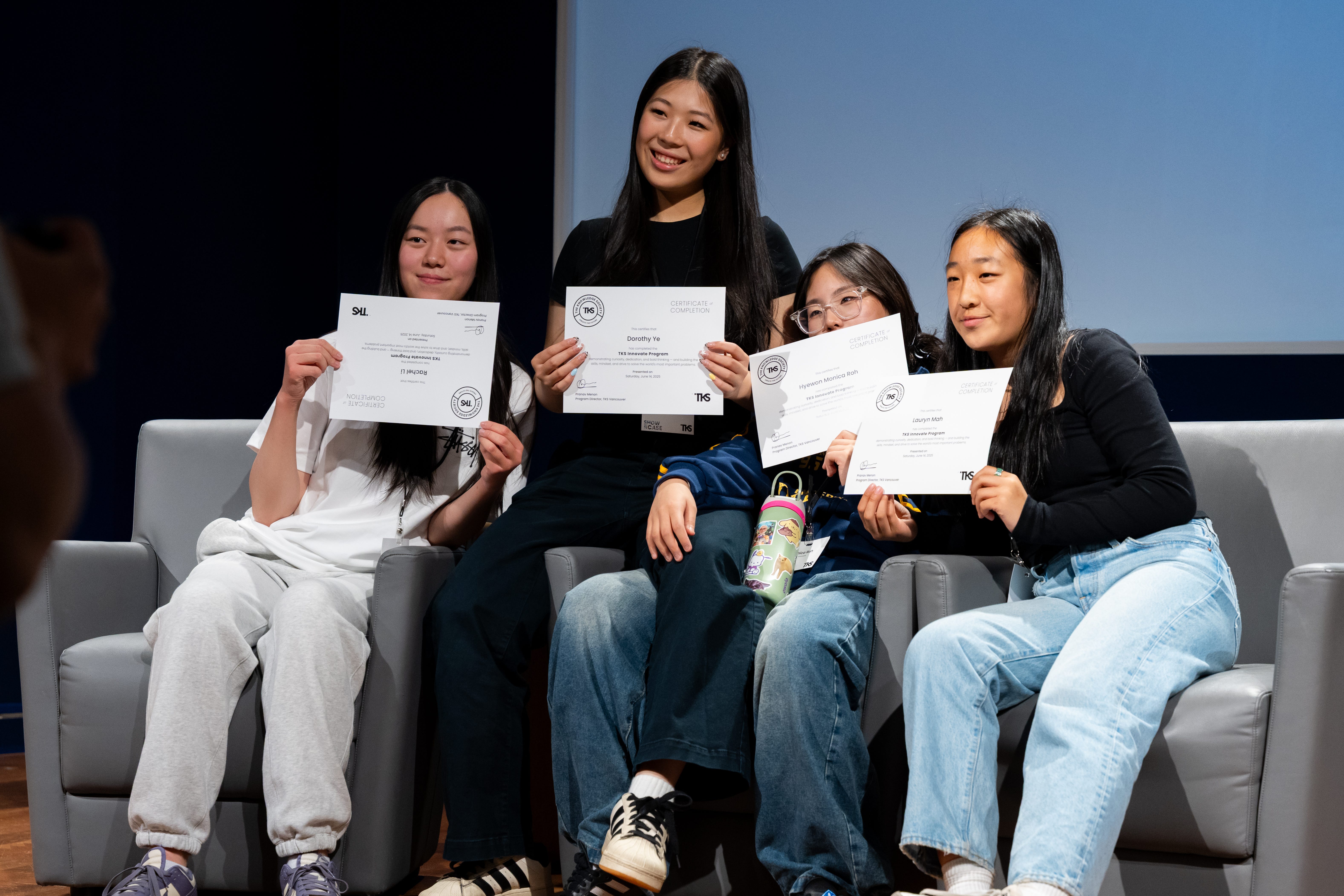
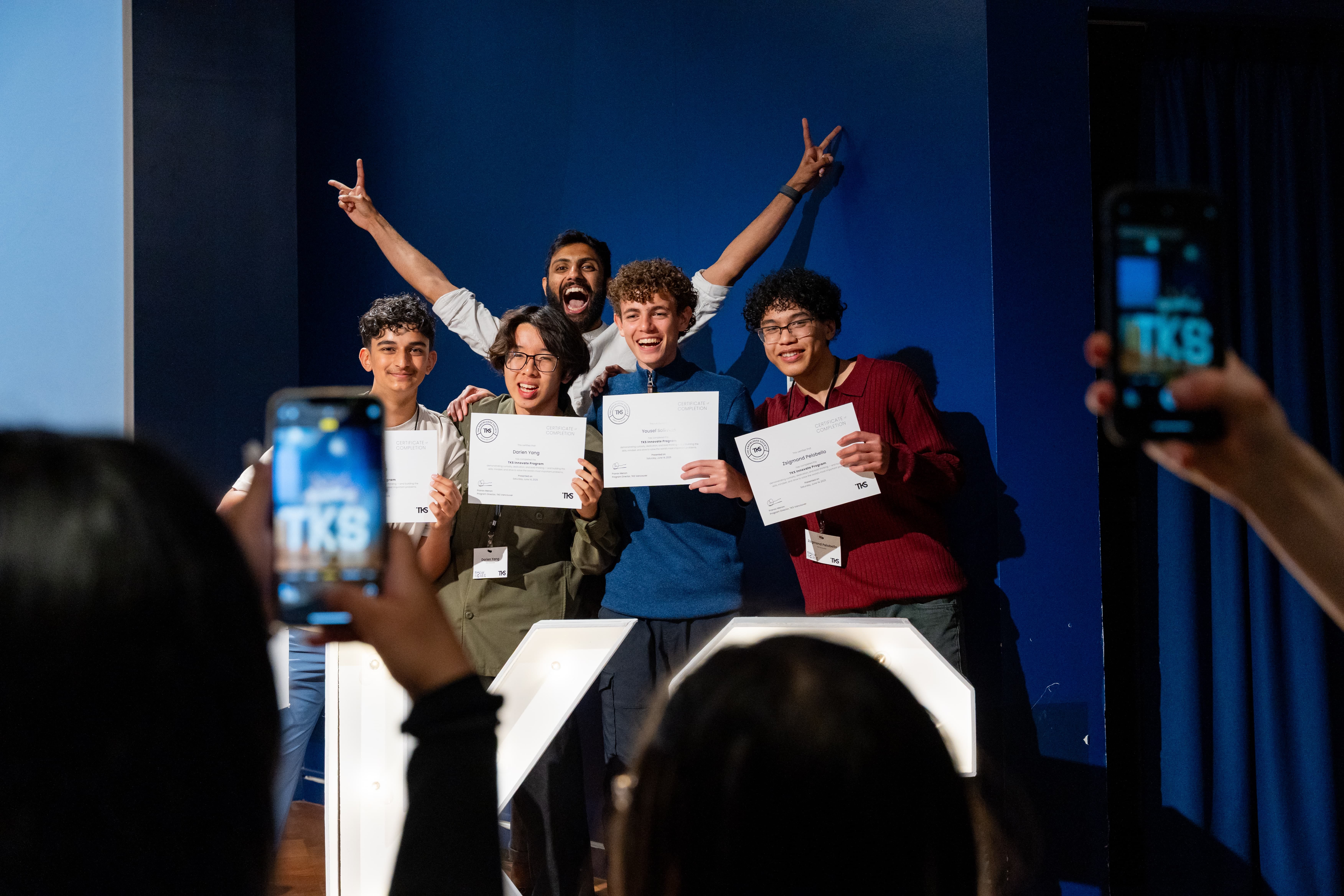
TKS is far more than a ten‑month “YouTube alternative” for emerging tech. The program’s true mission is to develop three core attributes — character, agency, and quality — rather than simply teaching technical content.
Near the middle of the TKS program, each student receives a personalized report that assesses these attributes.
Character
Reflects how you build relationships, communicate, collaborate, and contribute within the community.
- Phase 1 — Emerging
- Phase 2 — Developing
- Phase 3 — Engaging
- Phase 4 — Exemplary
Agency
Measures your initiative and drive: exploring new tech, launching projects, seeking mentorship, and managing time effectively.
- Phase 1 — Emerging
- Phase 2 — Aspiring
- Phase 3 — Proactive
- Phase 4 — Driven
Quality
Evaluates the depth, creativity, and impact of your work.
- Level 1 — Beginning
- Level 2 — Developing
- Level 3 — Proficient
- Level 4 — Exceptional
My final scores were Character 3, Agency 4, and Quality 4, reflecting the growth and mindset shifts I experienced only halfway through the program.
Although this is a mid-program snapshot and Pranav didn’t give an updated report, the growth I had in the back half makes me confident these scores would have improved further.
End‑of‑Year Wins
By June, we were making headlines. Two of my cohort mates, Jugraj Basra and Tristan Jiang, appeared on CTV Morning Live and Global News Vancouver to demo the brain-computer interface they built during TKS. You can watch the segment here.

By year‑end, TKS Vancouver students had published articles on quantum chemistry, zero‑shot learning, diffusion models, AI for tuberculosis detection, Formula 1 aerodynamics, and DeFi credit in emerging markets. The articles brought speaking invitations, new industry contacts, and real project offers.
.png)
.png)
.avif)