.avif)
Within a year, the school's computer time ran out faster than anyone budgeted for, mostly because Gates and his friends kept finding ways to use more of it, including a stretch where a local company let them use its systems for free in exchange for finding bugs in its software. By the time Gates got to college, he'd already spent years writing real programs, debugging real systems, and thinking about software the way most people only start to after their first internship.
Most high schoolers today aren't going to stumble into a mainframe terminal, but the tools available now are far easier to access than what Gates had. The tech skills for high schoolers worth building in 2026 have also expanded well past just writing code. Here's what's actually worth spending time on, and where to go learn each one without waiting for a class to teach it.
1. Foundational Coding: Python, the language AI is built on
Saying someone should "learn to code" is vague enough to be useless. Among the best programming languages for high schoolers, Python is the clear starting point, since it reads close to plain English, making it one of the easiest programming languages for beginners. It's also used everywhere, from data science and automation to web development.
More importantly, Python is the language behind modern AI. The world's most widely used AI frameworks, like PyTorch, TensorFlow, and LangChain, are all built around Python.
If you want to build, customize, or integrate AI, not just type prompts into someone else's app, you'll need Python. It's the bridge between human ideas and machine learning.
You don't need to master it in high school. Just learn the basics: writing simple scripts, using loops and functions, and getting comfortable reading other people's code. This is also where most coding skills before college actually get built, not in a classroom, but through small personal projects.
Where to learn it for free: CS50P (Harvard's Python course, free on edX), freeCodeCamp's Python curriculum, or just working through small projects on Replit, which runs code directly in the browser with nothing to install.
2. AI Literacy & Prompt Engineering
Every high schooler already uses ChatGPT for homework. Far fewer understand what's happening underneath it, and that's exactly where one of the most in-demand tech skills for teens right now sits.
Understanding how a large language model predicts the next word, why it hallucinates, or how something like a neural network gets trained is more valuable than knowing clever prompts. This is also one of the strongest tech skills for college applications too. Building even a simple AI project, like a chatbot or an image classifier, shows technical depth that few applicants have.
Where to learn it for free: Andrew Ng's Machine Learning course on Coursera, Google's "AI for Everyone," or Kaggle's free micro-courses, which pair short lessons with real datasets to practice on immediately.
3. Git and Version Control
Almost no high schooler touches Git before college, and almost every real engineering team runs on it daily. It's the system that tracks changes to code, lets multiple people work on the same project without overwriting each other, and shows up in literally every software job that exists.
It's not glamorous, but it's the kind of skill that makes someone look like they've actually worked on a team project instead of just a solo school assignment. Plus, your GitHub profile acts as a digital resume for internships.
Where to learn it for free: GitHub's own "Git Handbook," or the free interactive tutorial at learngitbranching.js.org, which turns the whole thing into a visual puzzle instead of a wall of terminal commands.
4. Reading and working with data
Data literacy sounds academic, but it's really just the ability to open a spreadsheet or dataset and pull something useful out of it instead of staring at rows of numbers. That could mean basic Excel or Google Sheets skills, or a step further into Python libraries like pandas for cleaning and analyzing data. This one matters across almost every field, not just tech, since research, business, and even journalism all lean on someone who can make sense of raw numbers.
Where to learn it for free: Google's free Data Analytics modules, or Kaggle's pandas micro-course, which teaches the library using actual public datasets instead of toy examples.
5. Cloud computing basics
Almost every modern app, website, and AI tool runs on cloud servers, not on someone's personal computer. Understanding the basics of cloud computing, what a server actually is, how storage and hosting work, and how services like AWS, Google Cloud, or Azure fit into building something real, gives a high schooler a working picture of how modern software actually gets deployed and used by real people.
Nobody needs to become a cloud architect at sixteen. Just knowing how to deploy a small project online is already a meaningful head start.
Where to learn it for free: AWS Educate (free cloud fundamentals built for students), Google Cloud's free Skill Boost courses, or simply deploying a basic project using free tiers on services like Vercel or Render.
6. Cybersecurity hygiene and awareness
This one isn't about becoming a hacker or a security researcher. It's about the basic habits that keep a person and their projects safe, understanding phishing attempts, using a password manager instead of reusing the same password everywhere, knowing what two-factor authentication actually protects against, and understanding just enough about how data breaches happen to take them seriously.
For anyone building and shipping projects, even simple ones, this matters even more, since a small app with sloppy security habits can expose real user data fast.
Where to learn it for free: Google's own free "Foundations of Cybersecurity" course on Coursera, or the National Cyber Security Alliance's free resources built specifically for students and beginners.
Actually shipping something
All of the above matter less without one final piece: building something real and finishing it, even if it's small. How much tech experience colleges expect from applicants is often judged by whether you've built a real project that an admissions officer or interviewer can actually see and not just a resume full of courses.
That's the difference between someone who took a coding class and someone who applied what they learned to build a website, an app, or a small AI tool, then put it out into the world.
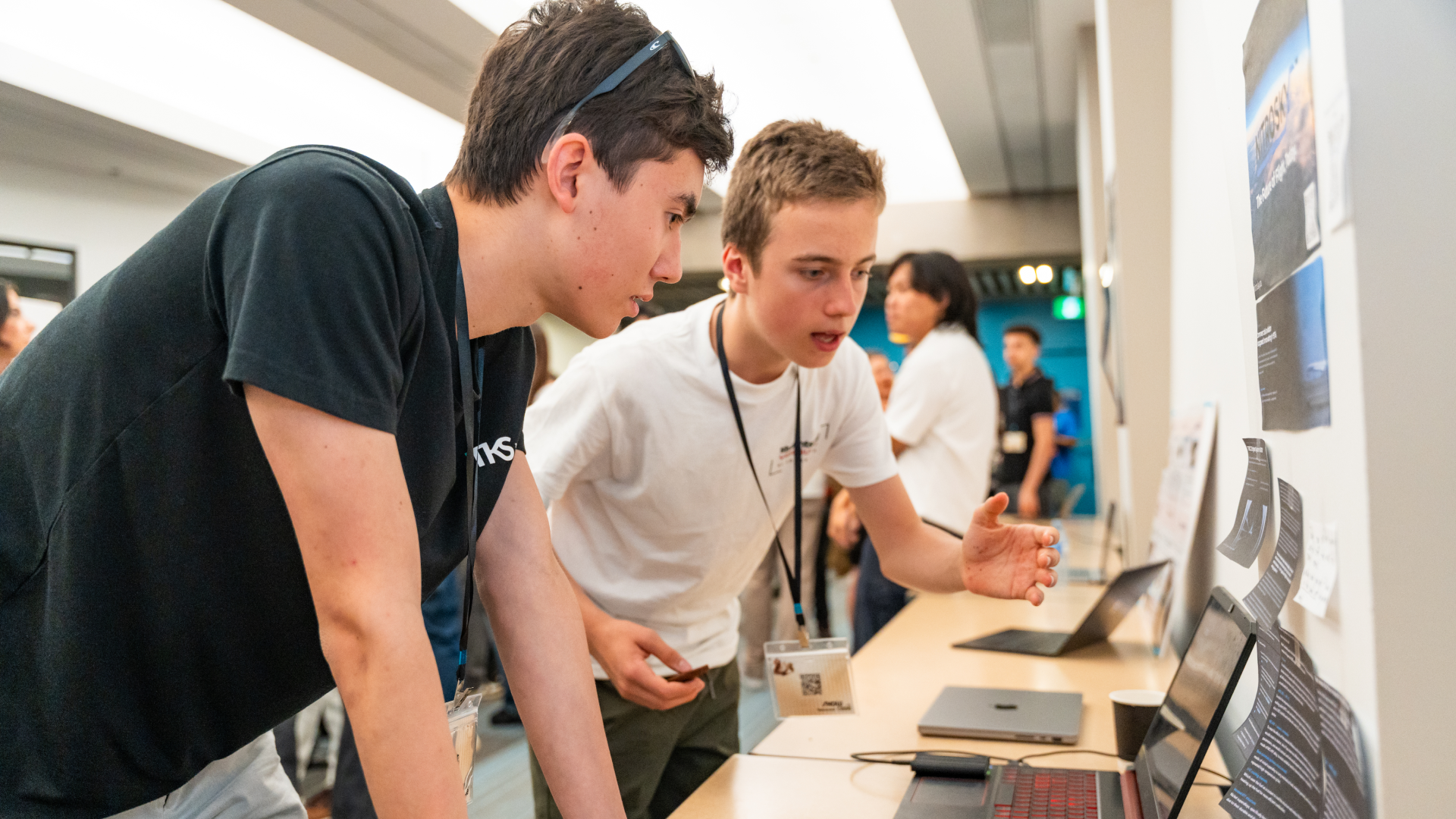
Where to build this: Hackathons (many are free and open to high schoolers, like those listed on MLH), open-source projects on GitHub, or structured programs like TKS, which pair teenagers with mentors already working at places like OpenAI and NASA over a ten-month, hands-on program instead of a classroom syllabus.
FAQs
1. What tech skills should a high schooler learn before college? Python is the most practical starting language, alongside a working understanding of AI and machine learning basics, Git for version control, data literacy through tools like Excel or pandas, cloud computing fundamentals, and basic cybersecurity hygiene. Together, these cover most of what a first-year CS student is expected to already be comfortable with.
2. Is coding necessary before starting a CS degree? No, most computer science programs teach programming from scratch. Arriving with some experience already under your belt just means spending less time stuck on basic syntax and more time on the harder concepts a CS degree is actually built around.
3. What programming language should a beginner learn first? Python, mainly because its syntax stays close to plain English and lets a beginner focus on logic and problem-solving instead of getting stuck on formatting and technical rules early on.
4. How much tech experience do colleges expect from applicants? Not a finished degree's worth, but admissions officers do notice real, self-built projects. A small shipped app or tool usually says more about initiative than a class grade ever could.
5. Are there tech skills that matter more than others for college admissions? Yes. Hands-on AI experience tends to stand out the most right now, mainly because so few high schoolers have gone deep enough into the space to actually build something in it, rather than just use existing tools.
6. Can you learn these skills without taking a formal class? Yes, and it's often the faster path. Free courses, open-source projects, hackathons, and hands-on programs like TKS all teach these skills through actual practice, which tends to stick better than a classroom lecture ever does.
.png)
.png)
.avif)